
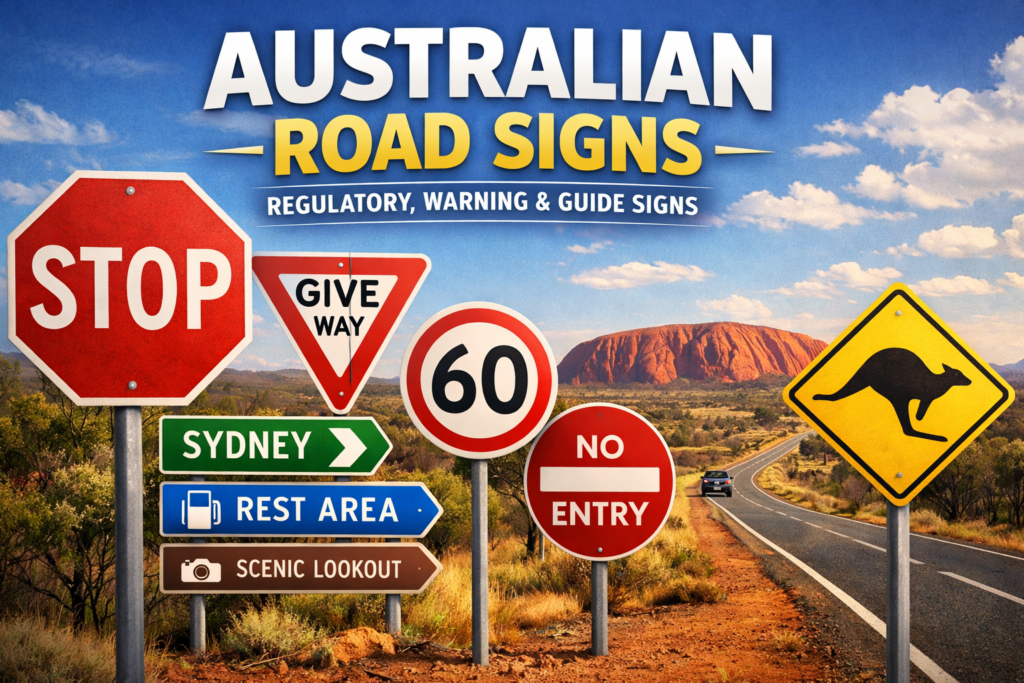
Australia’s vast road networks stretch from bustling urban centres to remote outback highways. Whether you’re commuting through Sydney traffic, driving along coastal routes, or managing access roads on private property, understanding road signage is critical for safety and compliance. Traffic signs are more than just metal panels by the roadside — they are standardised communication tools designed to guide, warn, and regulate drivers across the country.
This guide provides a comprehensive overview of essential Australian road signs for both drivers and business owners. Whether you’re preparing for your driving test or sourcing signage for a construction site, school zone, or commercial property, knowing the purpose and requirements of each category is essential.
Common Regulatory Signs in Australia
Regulatory signs are the backbone of road control in Australia. These signs inform drivers of laws and rules that must be obeyed at all times. Failure to comply can result in fines, demerit points, or serious accidents.
Some of the most common regulatory signs include:
- Stop signs – Require drivers to come to a complete stop before proceeding.
- Give Way signs – Instruct drivers to yield to other vehicles or pedestrians.
- Speed limit signs – Indicate the maximum legal speed permitted on a particular stretch of road.
- No Entry signs – Prevent vehicles from entering restricted roads.
- No Parking signs – Specify areas where parking is prohibited or limited.
For businesses, councils, and property managers who need compliant traffic signs, sourcing from reputable Australian manufacturers is crucial. Companies such as Jason Signs specialise in producing Australian Standard–compliant road signage suitable for both public and private applications. Using compliant signage ensures consistency with state regulations and improves safety outcomes.
Warning Signs on Australian Roads
Warning signs are designed to alert drivers to potential hazards ahead. Unlike regulatory signs, which enforce laws, warning signs prepare motorists to adjust their behaviour based on upcoming conditions.
In Australia, these signs are typically diamond-shaped and use black symbols on a yellow background for maximum visibility.
Common examples include:
- Animal crossing signs – Particularly relevant in rural areas, kangaroo and wombat crossing signs alert drivers to wildlife risks.
- Road hazard warnings – Indicate sharp bends, steep descents, loose gravel, or roadworks.
- Weather-related signs – Warn of flood-prone roads, high winds, or fog-prone zones.
For businesses operating warehouses, construction sites, farms, or industrial facilities, installing appropriate warning signs is equally important. Proper hazard signage reduces liability, improves workplace safety, and ensures visitors and contractors are well-informed.
High-quality warning signage manufactured to Australian standards ensures durability against harsh weather conditions, including intense UV exposure and heavy rainfall common across many parts of the country.
Guide Signs for Navigation
Guide signs help drivers reach their destinations efficiently. These signs provide directional information, distances, and guidance toward services or attractions.
They are commonly seen in green, blue, or brown formats depending on their purpose:
- Green signs – Direction and distance information for highways and major roads.
- Blue signs – Services such as hospitals, fuel stations, airports, and rest areas.
- Brown signs – Tourist attractions and points of interest.
For example, drivers travelling long distances rely on clear direction and distance signage to plan fuel stops and rest breaks. Tourists exploring regional areas benefit from properly marked scenic routes and attraction signage.
Businesses and property developers may also require customised guide signage for large facilities, shopping centres, or event venues. Professional signage providers like Jason Signs offer custom guide signage solutions that align with Australian road standards while meeting specific project requirements.
Clear navigation signage not only improves road safety but also enhances user experience and accessibility.
Where to Purchase Quality Traffic Signs
When purchasing road signage in Australia, compliance and quality should be top priorities. Australian road signs must adhere to strict standards to ensure uniformity nationwide. These standards regulate dimensions, colours, reflectivity, materials, and symbol usage.
Working with an established manufacturer such as Jason Signs ensures:
- Compliance with Australian Standards (AS/NZS specifications)
- Use of high-grade reflective materials
- Long-lasting durability for outdoor environments
- Professional manufacturing processes
Cheap or non-compliant signage can create confusion, increase legal risks, and compromise safety. This is particularly critical for local councils, contractors, schools, and commercial property owners.
When selecting signage, consider:
- The environment (urban, rural, industrial)
- Exposure to weather and UV
- Required reflectivity grade
- Installation method and mounting hardware
Investing in high-quality signage is ultimately an investment in safety and long-term cost efficiency.
Traffic Signs for Businesses and Private Properties
Many people associate road signage strictly with public highways, but businesses also have legal and safety responsibilities when managing traffic flow on private property.
Common business applications include:
- Warehouse speed limits
- Loading zone restrictions
- Pedestrian crossings
- Car park directional signage
- Construction site hazard warnings
Properly installed signage helps manage vehicle movement, reduce accidents, and ensure compliance with workplace health and safety regulations.
For example, a logistics company operating heavy vehicles on-site must clearly indicate speed limits and pedestrian zones. Retail centres require directional signage to guide customers safely through parking facilities. Even schools and childcare centres need compliant signage to protect children during drop-off and pick-up times.
Using professional-grade signage ensures consistency with national road standards, even on private property.
The Importance of Understanding and Respecting Road Signs
Beyond purchasing and installing signage, understanding road signs as a driver is equally important. Every symbol, colour, and shape has been carefully standardised to convey information quickly and clearly.
Ignoring road signs can lead to:
- Traffic fines and demerit points
- Increased accident risk
- Legal liability
- Endangerment of pedestrians and other drivers
Australia’s road system is designed around predictable, uniform signage so that drivers can react instinctively. Whether travelling interstate or navigating a regional road, consistent signage allows drivers to interpret instructions without hesitation.
New drivers preparing for their learner or provisional licenses should pay particular attention to regulatory and warning signs. Meanwhile, experienced drivers should remain vigilant, especially in unfamiliar areas or changing road conditions.
Roarleveraging Business Infoguide by Riprogar reveals practical growth strategies, smart leveraging methods, and proven insights to help businesses scale with confidence.
Frequently Asked Questions (FAQs)
What are Australian road signs used for?
Australian road signs are used to guide, warn, and control drivers on the road. They help keep traffic moving safely and reduce accidents by giving clear instructions and warnings.
What is the difference between regulatory, warning, and guide signs?
Regulatory signs tell you what you must do by law, warning signs alert you to dangers ahead, and guide signs help you find directions, services, and destinations.
Are Australian road signs the same in every state?
Yes, Australian road signs follow national standards, so they look and mean the same in every state and territory. This helps drivers stay safe when travelling interstate.
What happens if a driver ignores a regulatory road sign?
Ignoring a regulatory sign can result in fines, demerit points, or even licence suspension. More importantly, it can cause serious accidents.
Why are warning signs usually yellow in Australia?
Warning signs are yellow because the colour is easy to see in both daylight and low-light conditions. This helps drivers notice hazards early and react in time.
What do diamond-shaped road signs mean?
In Australia, diamond-shaped signs are warning signs. They alert drivers to possible dangers like sharp curves, animals, roadworks, or slippery roads.
Who must install road signs on private property?
Business owners and property managers are responsible for installing proper traffic signs on private property such as car parks, warehouses, and construction sites.
Do private properties need Australian Standard road signs?
Yes, many private sites must use Australian Standard–compliant signs, especially where vehicles, workers, or the public are involved, to meet safety and legal requirements.
What materials are Australian road signs made from?
Most Australian road signs are made from aluminium with reflective sheeting. This makes them durable, weather-resistant, and visible at night.
Why is reflective material important on road signs?
Reflective material allows signs to be clearly seen at night when headlights shine on them. This is essential for driver safety in low-light conditions.
1What are guide signs used for on highways?
Guide signs help drivers find directions, distances, fuel stations, rest areas, hospitals, and tourist attractions, especially on long-distance routes.
Are temporary road signs different from permanent signs?
Temporary signs, such as roadwork signs, are often portable but still follow the same design rules so drivers can easily understand them.
How often should road signs be replaced?
Road signs should be replaced when they fade, become damaged, or are no longer reflective. Regular inspections help ensure signs remain visible and effective.
Why are animal crossing signs common in Australia?
Australia has a lot of wildlife, especially in rural areas. Animal crossing signs warn drivers about animals like kangaroos to help prevent collisions.
Why is understanding road signs important for new drivers?
Understanding road signs helps new drivers react quickly, avoid fines, and drive safely. It also builds confidence when driving in unfamiliar areas.
Conclusion
Understanding Australian road signage is essential for both safe driving and responsible property management. From regulatory instructions like stop and speed limit signs to warning and guide signage, each category plays a vital role in maintaining order and reducing accidents on Australian roads.
For businesses, councils, and property owners needing compliant traffic signs, working with reputable manufacturers ensures adherence to Australian Standards and long-term durability. Providers such as Jason Signs offer high-quality solutions tailored to both public and private applications.
By recognising, respecting, and investing in proper signage, we contribute to safer roads and more efficient traffic flow across Australia.
Disclaimer:
“This article is for general informational and educational purposes only. It does not provide legal, professional, or safety advice. Road rules and signage requirements may change, so readers should consult official authorities or qualified professionals before making decisions.”
