
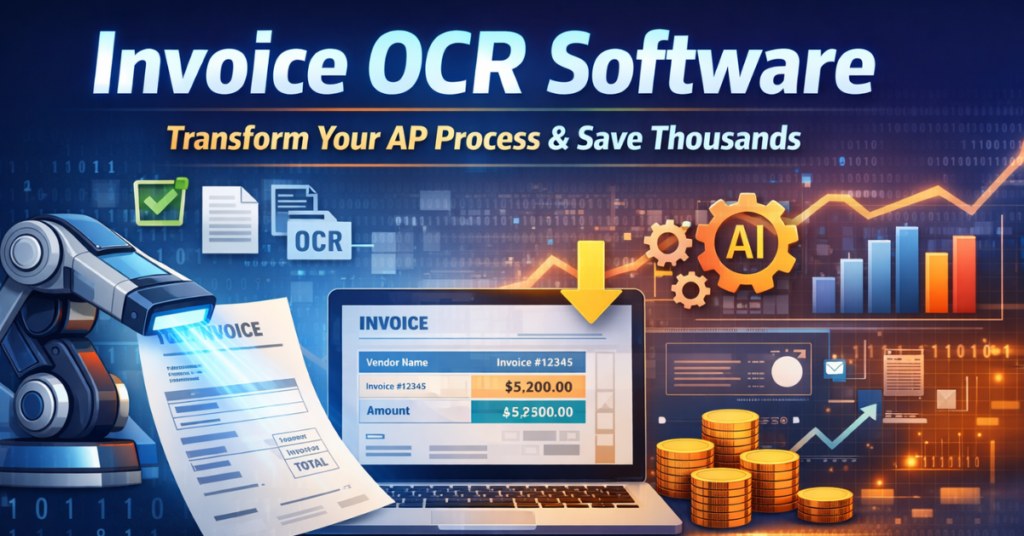
Accounts payable have changed a great deal over the past decade. Manual data entry made processing invoices slow, error‑prone, and expensive. Today, invoice OCR software brings a new way to handle large volumes of invoices with speed and accuracy. Businesses that adopt invoice automation see improvements in productivity, a reduction in errors, and lower operational costs.
In this article, you will learn what invoice OCR software is, how it works, its advantages, and what features to look for. You will also see how companies apply this technology in real life, and how the accounts payable department can continue to grow with invoice scanning software, invoice workflow automation, and AP workflow automation that fits modern needs.
What is Invoice OCR Software?
Invoice OCR software refers to systems that use optical character recognition to convert invoice images, scanned invoices, and other document files into readable text. This text becomes structured content that accounting systems can use without manual typing. Before this technology, teams spent hours typing numbers, vendor names, and totals from paper invoices into spreadsheets or ERP systems. The result was slow processing, frequent mistakes, and limited visibility into invoice data extraction.
Now, invoice digitization solution tools like this capture invoice data directly and feed it into accounts payable, reducing manual work. Beyond simple OCR text recognition, modern systems include intelligent document processing and machine learning OCR to handle variations and formats that used to break standard OCR tools. This means even handwritten invoice recognition or invoices with irregular layouts can be captured and processed into structured data extraction for fast processing.
How Invoice OCR Software Works?
When a vendor sends an invoice, it typically arrives in a range of formats. Some businesses still receive paper invoices, while others get PDF invoices by email. Invoice OCR software reads these formats and converts their contents into text that software systems can understand.
The first step is OCR invoice scanning, where the system reads every character in the invoice. Then the tool applies rules to separate headers, totals, line items, tax values, and vendor names. The processed data flows into the invoice processing platform or invoice management system. Modern systems also apply AI-enabled OCR or machine learning invoice models to improve reading quality over time so that the system becomes more accurate with repeated use.
In practical terms, this process eliminates almost all need for manual typing, significantly reducing errors in fields like vendor ID, invoice number, invoice date, and amounts. This makes the entire invoice approval workflow, automated data entry, and invoice exception handling faster and more reliable. The combination of OCR document capture, invoice data automation, and accounts payable automation creates a digital process that moves data from receipt to approval without tedious human steps.
AI‑Powered Invoice Scanning Solutions
Invoice scanning becomes efficient when advanced technologies analyze invoices beyond simple text reading. When an invoice arrives, the system does more than read letters and numbers. It interprets the meaning of each element using AI document processing and AI invoice recognition models. These systems learn from each invoice process and adjust how they handle similar patterns next time, improving accuracy. For example, once the system learns how your vendor formats their invoice, future invoices from that vendor get processed more accurately and faster.
This intelligent scanning lets you process invoices with nonstandard fonts, poor scan quality, or complex layouts. Instead of rejecting invoices for human review only when the system fails, intelligent invoice capture means fewer exceptions and less interruption in the accounts payable software workflow.
Data Capture and Extraction Process
Once the system reads the image or PDF, it separates each piece of information into defined fields. This is where OCR invoice capture and invoice metadata extraction happen. The software identifies where the invoice number is, where the total due sits, and where line item details are. It then converts each piece into a field that downstream systems — like an ERP or financial management integration — can recognize and use to validate entries or drive workflow automation.
At this stage, the AP team can link captured data with purchase orders or related documents, a process called automated PO matching. When successful, the invoice moves through the invoice approval workflow faster because the system already collected all required details. Traditional systems required staff to check these fields manually before payment. This change leads to faster processing and more accurate results.
Key Advantages of Invoice OCR Software
Adopting invoice automation brings clear gains for organizations of all sizes. The most obvious improvements come from speed and accuracy, but there are more strategic outcomes as well.
Save Time and Reduce Manual Effort
Manual entry and verification used to take days for large batches of invoices. Today, with OCR invoice processing, tasks that required manual intervention are now automated. This frees professionals to focus on value‑added activities like analyzing supplier performance or optimizing cash flow. The automated extraction of key data eliminates repetitive typing, copy/paste tasks, and unproductive waiting time.
Financial teams notice immediate changes when they switch to automated workflows. Because invoice scanning solution tools capture details automatically and send them directly to ERP system integration, teams can reduce the number of steps needed to get approval or schedule payments. This efficiency translates into measurable savings in hours and labor costs.
Improve Data Accuracy and Minimize Errors
Invoices entered manually almost always have data errors. Even strong professionals occasionally mistype vendor addresses, invoice totals, or tax numbers. With invoice data capture through OCR systems, the accuracy of invoice details improves because the software eliminates most human mistakes.
When the process moves from manual to automatic, companies also reduce the frequency of misapplied payments, incorrect postings, and disputes with vendors. Fewer errors mean fewer delays and a higher level of trust in the invoice processing software results used for reporting and forecasting.
Cost Reduction and ROI
One of the biggest benefits of AP process automation is cost savings. Businesses that implement automated invoice approval and capture workflows often see a substantial reduction in labor costs that used to go toward manual entry and corrections. At the same time, automated systems remove paper handling costs, filing needs, and storage space requirements.
Since the software eliminates many repetitive tasks, businesses see a high return on the investment in invoice management solutions. Over time, the money saved in staffing, error correction, late fees, and duplicate payments adds up significantly, offering a clear financial case for automation.
“If you also need branding tools, this ultimate guide explains which is the best software to design logo GfxPixelment with features, pricing, and ease of use.”
Essential Features of Invoice OCR Software
Not all solutions deliver the same value. Some tools only scratch the surface of what modern teams need. The best systems combine multiple functions that support day‑to‑day operations and allow growth.
Robust Integration with Existing Systems
The integration between the invoice automation platform and the existing ERP system is vital for real results. When invoice OCR connects with systems like Microsoft Dynamics, SAP, or QuickBooks, data flows freely and instantly between platforms. This means users do not have to enter or export information manually from one system to another.
Because the data captured from invoices goes into the accounting core automatically, businesses can minimize data gaps and keep financial records up to date without separate reconciliation steps. This is a core advantage of any mature invoice management system.
Support for Multiple Invoice Formats
Invoices come in many forms: PDF invoices, scanned paper invoices, emailed attachments, or even faxed files. A complete invoice automation platform handles multi‑format invoice handling and extracts data no matter how the invoice arrives.
When systems can read various file types without manual conversion, teams save time that was once spent converting documents before processing. Advanced platforms also handle irregular layouts and nonstandard formats, reducing the number of exceptions flagged for manual review.
Touchless Accounts Payable Processing
Touchless invoice processing means that once an invoice arrives, the software captures it, extracts the data, validates it, matches it with orders, and moves it through approval, all without human intervention. This is a key milestone for any modern AP team because it leads to faster payment cycles and fewer bottlenecks.
Touchless AP is not just a feature. It represents a change in how accounts payable works day to day. When invoice automation eliminates most touchpoints, AP becomes a department focused on analysis and insight rather than repetitive task work.
Implementing Invoice OCR Software in Your Organization
Making the change from manual entry to digital invoice processing requires planning, people readiness, and technology alignment. These decisions determine how successful and smooth the shift will be.
Choosing the Right Software for Your Business
Not every business needs the same level of automation. Some organizations need basic cloud‑based invoicing, while others require structured workflows with advanced exception handling and machine learning OCR. Evaluating needs like future growth, invoice volume, and existing systems helps find the best fit.
When choosing a platform, consider required integrations, ease of use, vendor support, and how well the solution handles exceptions or nonstandard invoices. The right fit means less friction during setup and better results from day one.
Onboarding and Employee Training
Introducing new technology means training the team who will use it. This involves not just showing how to operate the system but helping staff understand how it changes daily workflows. When teams feel comfortable with the tools, adoption increases, and support costs fall.
Training should cover how to monitor real‑time invoice tracking, how exceptions are displayed, how approval workflows work, and how to interpret reports from the invoice automation platform. With clarity on how the system works, teams can trust the process and extract value faster.
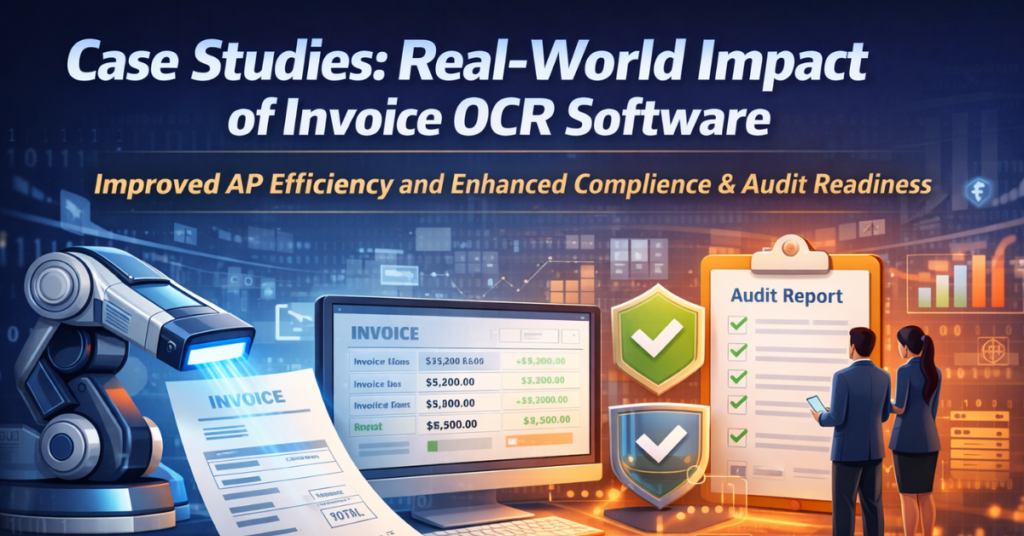
Case Studies: Real‑World Impact of Invoice OCR Software
Real companies show how automation moves beyond theory. When invoice OCR solutions work well, the benefits show in multiple areas of operations.
Improved AP Efficiency
One leading mid‑size company replaced its manual entry desk with automated invoice capture. In the first quarter alone, the AP team processed invoice batches 40 percent faster, thanks to the system’s ability to handle invoice scanning automation and deliver accurate extraction results. With less time spent on data entry, the team focused on verification, vendor response, and improving procurement decisions.
Enhanced Compliance and Audit Readiness
Companies that adopt structured data extraction and digital trails find it easier to prepare for audits. When every invoice passes through automated workflows, systems record who approved what and when. This visibility helps finance leaders answer audit questions quickly, often reducing audit hours by weeks compared to paper‑based records.
Advanced Capabilities of Modern Invoice OCR Software
Invoice software continues to evolve, offering features that support sophisticated AP strategies.
AI and Machine Learning Integration
Systems using AI invoice processing work better over time because machine learning models recognize patterns, vendor fields, and line items with growing confidence. This continuous improvement makes future invoice cycles smoother and reduces the need for manual intervention or configuration.
Automated Document Processing (IDP)
Intelligent document capture software can separate invoice content from other text, group related fields, and classify unstructured invoice data into usable tables and metadata. This increases data quality, reduces errors, and expands automation beyond simple OCR text reading into full digital invoice processing, where newer forms of documents no longer slow down the system.
Benefits Beyond Accuracy
Invoice OCR is valuable not just because it reduces mistakes. It transforms how accounting works at a human level.
Time Savings
Time once spent on typing, proofing, and correcting is now used for analysis, vendor strategy, and planning. Some AP teams report that they reclaim dozens of hours each month once they apply automation to their invoice workloads.
Scalability
When a company grows, and invoice volumes increase, automated solutions scale without requiring proportional increases in staffing. This means higher invoice volumes can be handled by the same team without losing quality or speed.
Enhanced Reporting and Analytics
Invoice processing solutions deliver better insights because every piece of data is structured and stored. Teams can pull reports on vendor performance, payment terms, discount capture, and cycle times with simple queries. This helps with financial planning and cost control.
Common Challenges and How to Overcome Them
Any technology shift has hurdles, but knowing what to watch for eases these bumps.
Integration Issues
Connecting new software with legacy systems sometimes requires planning and technical support. Ensuring API compatibility or working with vendors that offer flexible connectors helps businesses avoid gaps in information flow that slow down processing.
Handling Legacy Systems
Older accounting platforms may not support modern automation tools. In such cases, teams work with experienced partners who can build bridges between old and new systems, allowing gains even before full modernization occurs.
Ensuring Data Security
Automating accounts payable introduces new data flows, so security becomes even more important. Reputable solutions include encrypted transfer, role‑based access, and structured logs so only authorized users can access sensitive invoice and vendor records.
Touchless Accounts Payable: The Future of AP
Touchless AP is more than a phrase. It represents a state where the system manages most steps from invoice receipt to payment posting without human clicks.
Key Strategies to Drive Touchless AP
To get there, businesses focus on tightening their invoice workflow automation, improving data quality, expanding exception workflows, and connecting systems so that information moves from capture to reconciliation without manual checkpoints. These improvements create a smooth cycle that keeps invoices flowing without delays.
CFO Insights and Stress Reduction
Finance leaders find that operational stress drops when teams no longer get bogged down in repetitive, manual tasks. Instead, they can focus on performance analysis, forecasting, and strategy. With accounts payable automation in place, finance professionals deliver more value while managing risk more effectively.
Choosing the Best Invoice OCR Software for Your Business
Selecting the right solution means balancing features, cost, and future needs.
Vendor Comparison
Not all vendors are the same. Some offer advanced capabilities like invoice matching automation, invoice exception workflow, cloud invoice management, or cloud‑based AP tools. Comparing these features alongside pricing helps you pick a solution that not only works today but supports growth.
Pricing and ROI Considerations
When evaluating pricing, consider not just upfront license costs but ongoing support, onboarding fees, and training expenses. Compare this to expected savings from reduced manual entry, faster processing, and fewer errors. A good tool often pays for itself within the first year through reduced operational costs and improved efficiency.
Future Trends in Invoice OCR Technology
The world of accounts payable continues to change. As organizations demand faster, more reliable processes, technology keeps pace.
AI Enhancements
Future systems will offer even more accurate data capture, automated exception handling, and predictive insights that help finance teams plan vendor negotiations and cash management more effectively. Machine learning models will expand their understanding of varied invoice types and formats.
Cloud‑Based Solutions
Finance professionals increasingly adopt cloud invoice management tools because they provide access from anywhere, reduce infrastructure costs, and keep updates current without manual upgrades. Cloud‑based tools support remote teams and provide flexibility for companies that operate across multiple locations or time zones.
“For businesses exploring reliable accounting tools, this Peachtree Accounting Software ultimate guide explains key pros, cons, and real-world use cases in detail.”
Frequently asked Question (FAQs)
How does invoice OCR software improve accounts payable efficiency?
Invoice OCR software converts paper or PDF invoices into digital text that your accounting system can process automatically. This reduces manual data entry, speeds up approval workflows, and ensures invoices are paid faster. Businesses using OCR solutions often see a 30–50% reduction in processing time.
Can invoice OCR software handle handwritten invoices?
Yes. Modern handwritten invoice recognition tools can read and interpret handwriting, extracting important details like vendor names, invoice numbers, and amounts. This helps reduce errors and manual corrections for handwritten invoices.
What types of invoices can OCR invoice software process?
Invoice OCR software can handle multiple formats, including PDF invoices, scanned paper invoices, e-invoices, and EDI files. Some systems also support multi-format invoice handling, so your accounts payable team doesn’t have to convert files manually.
How does automated invoice capture work?
Automated invoice capture reads invoice data, organizes it into structured fields, and feeds it into your ERP system integration or cloud invoice management platform. This removes repetitive tasks and ensures that invoices are ready for the invoice approval workflow automatically.
Can invoice OCR software reduce invoice errors?
Yes. By using invoice data automation and structured data extraction, OCR systems minimize mistakes caused by manual entry. Errors in invoice totals, vendor codes, or line items are significantly reduced, improving accuracy and compliance.
How does invoice OCR software support touchless AP processing?
Touchless invoice processing happens when the software scans, extracts, validates, and routes invoices without manual intervention. This means your team only handles exceptions or unusual invoices, while the majority of invoices are processed automatically.
Is OCR invoice software compatible with ERP systems?
Yes. Most OCR platforms offer ERP system integration with solutions like SAP, Oracle, NetSuite, and Microsoft Dynamics. This ensures that invoice data flows smoothly into your existing financial systems without duplicate entry.
What is the benefit of cloud-based invoicing?
Cloud-based invoicing lets your AP team access invoices from anywhere, monitor real-time invoice tracking, and manage approvals on the go. Cloud solutions also reduce infrastructure costs and make software updates seamless.
How does invoice OCR software handle exceptions?
When an invoice has missing or mismatched information, the invoice exception workflow triggers alerts. The system highlights errors for review, allowing your team to resolve discrepancies quickly and keep payments on schedule.
Can OCR invoice processing improve compliance and audits?
Yes. Every processed invoice leaves a digital trail, which helps with invoice compliance software requirements. Audit teams can access approval history, invoice metadata, and processing records instantly, reducing audit preparation time.
How does invoice OCR software scale for growing businesses?
OCR and automated AP workflows can handle increasing volumes of invoices without adding more staff. The system automatically manages higher workloads, maintaining processing speed and accuracy even as your business expands.
What is intelligent document processing in invoice OCR software?
Intelligent document processing (IDP) goes beyond reading text. It organizes unstructured invoice data into structured formats, classifies invoices by type, and applies rules for approval, coding, and reconciliation. This reduces manual work and supports invoice workflow optimization.
How does invoice OCR software help with vendor invoice management?
OCR tools extract and organize vendor invoice data automatically. This enables automated invoice coding, faster payment approvals, and better visibility into outstanding invoices. Vendor relationships improve because payments are processed accurately and on time.
Can invoice OCR software support PDF invoice processing?
Yes. Most modern solutions support PDF invoices and automatically extract key details like totals, line items, and dates. This capability is part of OCR invoice scanning and helps minimize manual entry for PDF-based invoices.
How can small and mid-sized businesses benefit from invoice OCR technology?
Even smaller companies benefit from AP automation platform features like automated invoice capture, invoice data automation, and invoice workflow software. It reduces manual entry, lowers errors, saves time, and allows finance teams to focus on analysis and planning rather than repetitive tasks.
Conclusion
Invoice OCR software has transformed the way businesses manage accounts payable, moving from slow, error-prone manual processes to fast, accurate, and automated workflows. By converting invoices into structured digital data, organizations save time, reduce costs, improve accuracy, and gain greater visibility into their financial operations.
Modern solutions, powered by AI and intelligent document processing, enable touchless invoice handling, scalability, and enhanced reporting, making it easier for finance teams to focus on strategic decision-making rather than repetitive tasks. Whether for small, mid-sized, or large enterprises, adopting invoice OCR and AP automation represents a significant step toward efficiency, compliance, and future-ready accounts payable operations.
Disclaimer:
“The information in this article is for educational purposes only. It does not provide personal financial or business advice. Readers should evaluate solutions carefully and consult professionals before making decisions.”
