
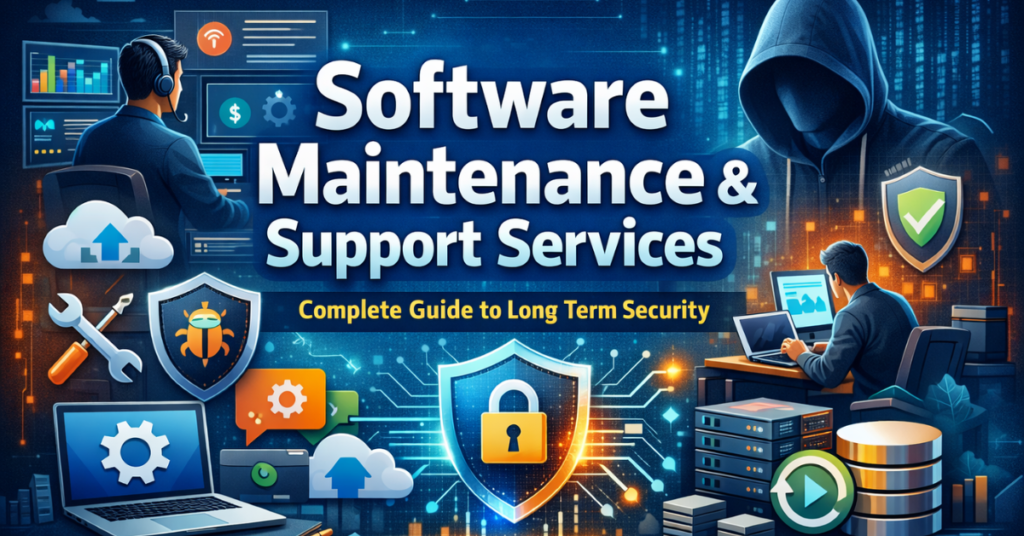
In the modern business environment, digital systems run almost every aspect of operations. When these systems function well, work moves smoothly, and customers stay satisfied. When they fail, productivity drops and costs rise. That is why software maintenance and support services are such a vital part of any business using software. These services include fixing errors that arise after deployment, updating software to meet changing needs, protecting systems from security threats, and supporting users when they encounter technical issues.
This guide explores how IT maintenance services and IT support services keep software secure and reliable over time. You will learn about the different types of maintenance, the roles of support teams like L1 support, L2 support, and L3 support, and how these services contribute to long‑term security, business continuity planning, and operational efficiency.
What Are Software Maintenance and Support Services?
When a company develops software, the work does not end after deployment. Over time, software needs updates, fixes, and enhancements to remain useful and protect the people who rely on it. Software maintenance and support services refer to all the activities that keep software systems working well after they have been put into use. Maintenance activities include things like patch management, software updates, bug fixing services, and software upgrades. Support services include helping users when they have trouble with the software, solving technical problems, and making sure systems stay accessible and reliable.
These services are carried out by a software maintenance team or by an IT service provider that specializes in professional IT support. The work they do makes sure that software continues to meet business needs, improves over time, and stays protected against risks like security breaches or unexpected failure. A good balance of IT maintenance services and IT support services helps company IT systems remain dependable for everyday use and for long‑term strategic planning.
Clear Definition for Modern IT Environments
In today’s technology landscape, software is expected to support complex processes, integrate with other systems, and protect sensitive information. Software maintenance and support in modern IT environments involves a combination of tasks that keep systems up‑to‑date, safe, and efficient. Application maintenance focuses on keeping the software applications themselves up and running with minimal disruption. It includes software error detection, software defect resolution, and software functionality improvements. IT support services, on the other hand, include help desk support, user support services, technical issue resolution, and IT problem resolution whenever users or systems encounter trouble. These services work together to maintain reliability, reduce downtime, and help employees and customers have a positive experience with company software.
Why Software Maintenance and Support Services Are Critical for Long‑Term Security
Software that is not maintained can become outdated, insecure, and unreliable. When security threats evolve and software ages, businesses become vulnerable to attacks that can lead to data loss, service interruptions, and impaired customer trust. Regular maintenance and support work, such as software performance monitoring, cybersecurity maintenance, data backup, and disaster recovery, plays a key role in protecting systems from threats. Studies show that many data breaches happen because attackers find weaknesses in outdated or unpatched systems. By investing in system monitoring and system integration support, businesses reduce the risk of threats and protect their networks and data over time.
Additionally, maintenance activities such as software upgrades and software updates help keep systems aligned with new security standards and technology changes. With these services in place, companies can confidently use their software without constant fear of sudden failures or breaches, which supports long‑term security goals for both IT and business operations.
Difference Between Software Maintenance and Support Services
Understanding the difference between maintenance and support helps organizations allocate the right resources where needed. Though closely related, these two components have distinct roles.
Scope and Responsibility Comparison
Software maintenance includes tasks that keep the software healthy and evolving. This can involve preventive maintenance to reduce the chance of future problems, corrective maintenance to fix errors that have been identified, adaptive maintenance to adjust the system for changes in the business environment, and software lifecycle management to guide the software through its entire period of use.
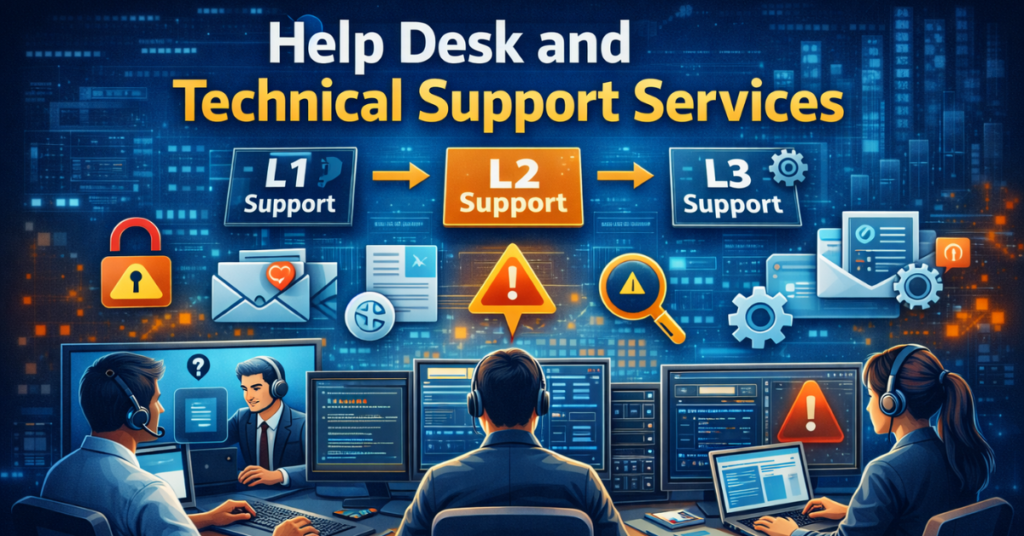
On the other hand, IT support services such as help desk support, L1 support, L2 support, and L3 support focus on reacting to problems when they occur. L1 support typically handles basic user issues and simple technical questions. L2 support handles more complex issues, including deeper analysis of problems. L3 support deals with advanced system administration tasks such as major configuration changes, custom enhancements, and support for enterprise systems that require specialized knowledge.
In short, maintenance is about keeping systems ready for future needs and improving them over time, while support is about helping users solve specific issues and keeping operations stable day by day.
Core Types of Software Maintenance and Support Services
Several main types of maintenance activities form the foundation of robust software maintenance and support. Each type targets a different set of needs:
Corrective maintenance focuses on fixing problems that have already happened.
Preventive maintenance reduces the likelihood that problems will occur in the future.
Adaptive maintenance makes software compatible with changes in technology or business needs.
Predictive maintenance uses signals from system monitoring and analytics to identify possible issues before they become actual failures.
Together, these maintenance types help keep systems healthy, adaptable, and safe. Meanwhile, support services like help desk support and technical support help users and systems stay productive on a day‑to‑day basis.
Corrective Maintenance in Software Systems
Corrective maintenance is the work done to fix software problems after they have been discovered. These issues might be the result of software defects, bugs, performance degradation, or unexpected responses under certain conditions. Corrective maintenance includes bug fixing services, software defect correction, and restoring features that stop working. In a business setting, fast corrective maintenance is important because even small software problems can slow down operations, reduce employee effectiveness, and frustrate customers. When properly executed, corrective maintenance restores software to its expected behavior and reduces the likelihood of related issues arising again.
Learn how testing in Zillexit Software ensures errors are caught early, improving reliability and boosting long-term system performance.
Preventive Maintenance for Risk Reduction
Preventive maintenance focuses on actions that help reduce the chance of software problems before they occur. Examples include keeping systems up to date with software updates and software upgrades, regular patch management to close known vulnerabilities, scheduled data backup to protect important information, and software performance monitoring to identify early signs of potential failures. These efforts help protect systems against unexpected outages, reduce the need for emergency fixes, and contribute to better long‑term software stability. Routine preventive tasks are a key part of IT maintenance services and contribute to reducing operational costs by avoiding expensive emergency corrections.
Adaptive Maintenance for Changing Business Needs
Adaptive maintenance helps software adjust to shifts in the environment around it. Businesses change their processes, adopt new technologies, and discover new customer needs over time. As these needs evolve, software must evolve as well. Adaptive maintenance includes software feature updates, adaptive system updates, and modifications that allow software to work with updated technology stacks or integrate with other systems. For example, an enterprise upgrading its internal process systems or adopting newer hardware may require adjustments at the software level. Without adaptive maintenance, systems can quickly become obsolete or difficult to use in a modern technical landscape.
Predictive Maintenance Using Monitoring and Analytics
Predictive maintenance uses real‑time information collected through software system monitoring and analytics to identify patterns that suggest a future problem. Rather than waiting for a failure to happen, predictive maintenance helps IT teams act ahead of time. This type of maintenance often relies on automated tools that watch system performance, resource usage, and error signals, sending alerts when something looks unusual. With this early warning, IT teams can fix issues before they affect users. By catching small problems before they grow into large ones, predictive maintenance improves IT system reliability and reduces the frequency and severity of unplanned outages.
Application Maintenance and Support Services
Application maintenance deals specifically with the software applications that businesses depend on for daily operations. It includes application enhancements, improving software usability, and resolving issues that users encounter while working with applications. Application maintenance also involves periodic application troubleshooting to keep performance at expected levels. For businesses with mission‑critical applications such as customer portals or internal process tools, this type of maintenance and support is essential to maintaining productivity and keeping workflows smooth. Through regular updates, performance checks, and user assistance, application maintenance helps software stay relevant and useful over time.
Database Maintenance and Support Services
Databases are where important business data is stored and processed, so maintaining this component of IT infrastructure is extremely important. Database maintenance includes tasks such as database performance tuning, regular data cleanup, data backup, and disaster recovery planning. When database performance declines, it can slow down applications and frustrate users. Timely maintenance ensures that databases perform consistently and efficiently. Backup and recovery processes further protect data from accidental loss or corruption. Maintaining strong database systems contributes to the overall reliability and security of organizational data.
Network and Infrastructure Maintenance Services
Networks connect users to applications, databases, and services. If network performance falters, users may experience slow response times, interruptions, or failures. Network maintenance includes monitoring traffic, updating devices, managing configurations, and applying patch management to keep network devices secure. IT infrastructure maintenance also covers servers, switches, and other components that support enterprise systems. Support teams focus on maintaining network availability, reducing latency, and providing stable connections across locations. Strong network maintenance helps businesses deliver services without interruption and supports long‑range technology goals.
Help Desk and Technical Support Services
Help desk support is often the first point of contact when users encounter software issues. Support professionals assist with account problems, forgotten passwords, software errors, and general usage questions. Help desk support is part of customer support services and addresses immediate challenges to keep users productive. Technical support teams provide deeper assistance when issues go beyond typical user questions. They offer IT problem resolution and troubleshooting support that may involve research, escalation, and direct intervention to fix issues. Support levels such as L1 support, L2 support, and L3 support help structure how quickly and effectively problems are handled. Users relying on help desk and technical support experience faster solutions and less frustration.
Role of Software Maintenance and Support Services in the Software Lifecycle
As software progresses from planning to retirement, maintenance and support play a continuous role. Early in the cycle, teams focus on getting systems stable and ready for wide use. Later, ongoing maintenance ensures that functionality aligns with changing customer needs and technical requirements. Support services give users the help they need to work effectively with systems, while maintenance activities keep software updated and compatible with other technologies. Together, these services extend the life of software and protect the investment businesses make in technology.
Security‑Focused Software Maintenance and Support Services
Security should be part of every maintenance plan. Cybersecurity maintenance includes applying security patches, running vulnerability scans, updating firewalls, and monitoring unusual activity. Software that falls behind on security updates becomes an easy target for attackers. By keeping up with security work and integrating monitoring into everyday maintenance, companies reduce the likelihood of breaches and protect both customer and internal data. Security‑focused services support network protection, database integrity, application safety, and user access control across systems.
How Software Maintenance and Support Services Prevent Costly Downtime
Unexpected downtime can be costly in terms of lost revenue and damaged reputation. Systems that are not monitored or maintained are more likely to fail when least expected. Through regular software system monitoring, preventive maintenance, and rapid response from support teams, companies can significantly reduce the amount and frequency of downtime. Consistent attention to software performance, timely updates, and expert responses to issues help systems stay operational and available when they are needed most.
Business Benefits of Software Maintenance and Support Services
Investing in software maintenance and support services brings advantages that go beyond fixing errors. Well‑maintained systems perform better, adapt to changes more smoothly, and deliver higher satisfaction for users. Teams dedicated to support keep users productive and reduce frustration. Regular maintenance reduces emergency repair costs, improves security, and keeps software aligned with business goals. Over time, these benefits add up to stronger operational efficiency, lower long‑term costs, and a more agile technology environment that supports growth and innovation.
Challenges in Delivering Software Maintenance and Support Services
Providing strong maintenance and support is not always easy. Teams must address a wide range of issues, from security threats to user problems, while managing evolving systems. One challenge is staying current with new threats as attackers find new ways to exploit weaknesses. Another is keeping up with changing platforms as cloud‑based tools and integrations become more common. Support teams must balance immediate user needs with longer‑term maintenance work that strengthens systems over time. Staffing can also be challenging when skilled professionals are in high demand.
Managing Cybersecurity Threats Through Ongoing Maintenance
Security threats change quickly. New vulnerabilities and attack methods appear regularly, so maintenance teams must be vigilant in applying updates, monitoring system behavior, and responding to unusual activity. Security maintenance includes continuous evaluation of software, network controls, and user access patterns. Updating security tools and configurations based on emerging threats helps protect systems before vulnerabilities are exploited. This ongoing work contributes to a secure environment and more reliable software systems.
Cloud‑Based Software Maintenance and Support Services
Many organizations are adopting cloud‑based systems because they offer flexibility, scalability, and often cost savings. Cloud‑based support means that maintenance and support operations can be delivered remotely with tools that monitor systems across platforms. Cloud systems often include automatic updates and backups, which support IT system availability and help reduce manual work. Cloud‑based maintenance and support also make it easier for distributed teams to stay connected and for remote IT support to respond to issues quickly.
Choosing the Right Software Maintenance and Support Services Partner
Selecting an IT service provider that fits business needs matters for long‑term success. A good partner will respond quickly to issues, offer clear service agreements, and provide expertise in areas such as enterprise software support, legacy software support, system integration services, and IT consulting services. Look for a provider that values communication and keeps your software aligned with evolving goals. When support and maintenance teams work collaboratively with internal staff, systems become more reliable and efficient.
Service Level Agreements (SLAs) in Software Maintenance and Support Services
Service Level Agreements define what clients can expect from their maintenance and support partner. These agreements often describe response times, availability targets, and responsibilities for addressing problems. A strong SLA outlines how quickly IT support services will respond to issues, when updates will be performed, and how problems are escalated within the support team. Clear SLAs help set expectations and give businesses confidence that their systems will remain dependable.
Cost Models for Software Maintenance and Support Services
The cost of maintenance and support services can vary widely depending on the complexity of systems, the level of support required, and the expertise of the provider. Some businesses pay a flat monthly fee for ongoing services, while others use time‑and‑materials billing based on work performed. Budgeting for cost‑effective maintenance is important because it prevents large emergency expenses when systems fall into disrepair. Planned spending on maintenance and support helps companies balance IT costs more predictably.
KPIs and Performance Metrics for Maintenance and Support
Measuring performance helps companies and their providers understand whether maintenance and support efforts are successful. Common metrics include system uptime, mean time to resolution, response time for support tickets, and user satisfaction scores. Monitoring these metrics allows IT teams to improve performance over time and make better decisions about staffing, procedures, and tools. High performance in these areas contributes to more reliable systems and better user experiences.
Future Trends in Software Maintenance and Support Services
The technology environment continues to change. New tools such as artificial intelligence assisting with monitoring, automated maintenance workflows, and advanced analytics are becoming more common. These trends help maintenance and support teams respond faster and more accurately to emerging issues. Services that adapt to new platforms, integrations, and user expectations will be more successful in supporting long‑term business goals.
Discover how HCS 411GITS Software was built to fix errors fast, ensuring smooth operations and reliable performance for every user.
Frequently Asked Questions (FAQs)
What are software maintenance and support services?
Software maintenance and support services involve keeping software systems functional, up-to-date, secure, and user-friendly. These services include preventive maintenance, corrective maintenance, adaptive maintenance, software updates, patch management, and help desk support, ensuring systems run smoothly for businesses and users.
Why are software maintenance services important for my business?
Maintenance services prevent downtime, reduce the risk of errors, and improve IT system reliability. They also include software performance monitoring and software defect resolution, which protect your data and optimize operational efficiency over time.
How does corrective maintenance work?
Corrective maintenance fixes problems after they occur, such as software bugs or system failures. It includes software defect correction, bug fixing services, and system fault correction, helping maintain the software system faultless and stable for everyday use.
What is preventive maintenance in software systems?
Preventive maintenance is designed to stop problems before they happen. Activities include software updates, patch management, data backup, system monitoring, and software upgrades, which reduce downtime and improve IT system availability.
How does adaptive maintenance help businesses?
Adaptive maintenance adjusts software to meet changing business needs. This includes adaptive system updates, software feature updates, and legacy system modernization, ensuring business software evolution aligns with industry requirements.
What is predictive maintenance in IT systems?
Predictive maintenance uses software system monitoring and analytics to detect potential issues before they affect users. It helps reduce system downtime, maintain software system reliability, and allows teams to act proactively.
What are the main types of software maintenance services?
The main types include corrective maintenance, preventive maintenance, adaptive maintenance, and predictive maintenance. Each type supports different goals like fixing errors, preventing issues, adapting to change, and forecasting potential problems.
What is the role of help desk support in software maintenance?
Help desk support provides users with technical support, resolves software issues, assists in application troubleshooting, and ensures user support services are prompt. It is essential for maintaining customer experience optimization.
How do software maintenance and support services improve software security?
These services include cybersecurity maintenance, patch management, system monitoring, and software system security, protecting systems from malware, vulnerabilities, and unauthorized access, keeping enterprise data safe.
What is the difference between L1, L2, and L3 support?
- L1 support handles basic user inquiries and simple troubleshooting.
- L2 support addresses more complex issues requiring system knowledge.
- L3 support involves advanced system administration, enterprise system management, and major software system enhancements.
How does software maintenance reduce operational costs?
Routine maintenance prevents costly downtime, limits emergency repairs, and reduces the need for replacements. Services like preventive maintenance, software updates, and software system optimization improve cost-effective maintenance over time.
Can maintenance services help with legacy software?
Yes. Legacy software support ensures older systems remain functional and compatible with new applications. Services like legacy system modernization, system integration support, and application enhancements help maximize ROI from existing software.
What is the role of cloud-based software maintenance and support?
Cloud-based support allows remote monitoring, software upgrades, system integration services, and quick issue resolution. It helps businesses maintain IT system availability, manage enterprise-grade software, and improve flexibility for distributed teams.
How do these services support the software lifecycle?
Software maintenance and support services guide software from deployment to retirement, ensuring software lifecycle management, software system usability, and continuous software functionality improvements. This extends the software’s value and relevance.
How do I choose the right software maintenance and support provider?
Look for a provider with experience in enterprise software support, IT infrastructure support, application integration support, and business process optimization. The provider should offer client-focused support, IT consulting services, and a dedicated software maintenance team to maintain reliable systems.
Final Thoughts on Long‑Term Security Through Software Maintenance
Strong software maintenance and support services are not optional for businesses that depend on digital systems. When software is well cared for, it performs better, stays secure, and keeps users productive. With a smart mix of maintenance types and expert support, systems remain reliable, costs stay manageable, and companies can focus on growth and innovation with confidence.
Disclaimer:
“The information in this article is for educational purposes only. It provides general guidance on software maintenance and support services and IT practices. Readers should consult qualified professionals before making decisions, as results may vary and risks may exist.”
