
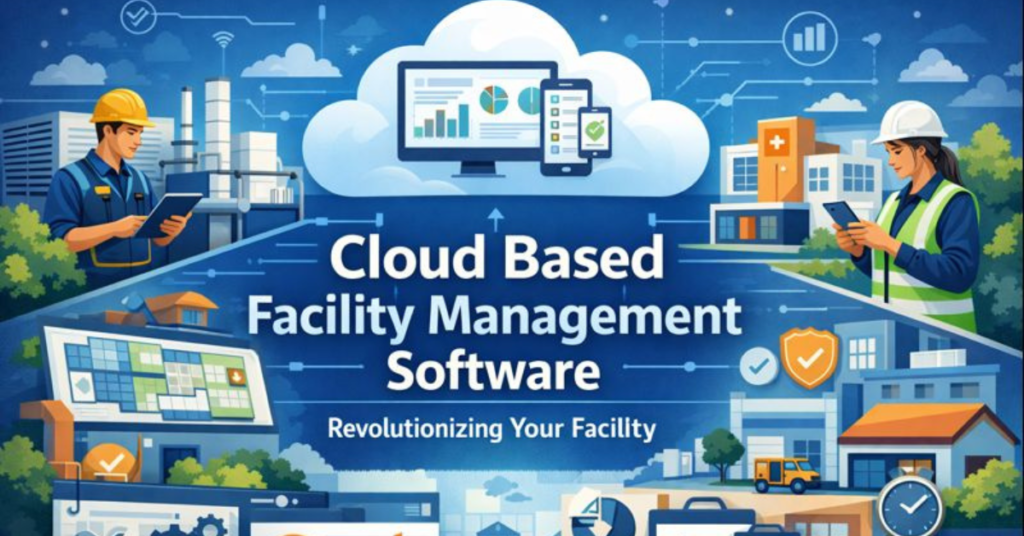
Managing facilities today requires more than just routine maintenance. With multiple buildings, diverse equipment, and compliance requirements, organizations need an organized way to track assets, monitor operations, and plan maintenance activities efficiently. Cloud-based facility management software helps facility teams streamline their maintenance operations, optimize asset management, and reduce costs while improving facility uptime.
This article explores the features, benefits, and applications of cloud-based facility management systems, highlighting why they are an essential part of modern facility operations.
Cloud-Based Facility Management Software
Cloud-based solutions for facility management provide a central platform where organizations can manage buildings, equipment, and maintenance workflows. By replacing spreadsheets, manual logs, and fragmented systems, facility management software gives facility teams visibility into maintenance operations, resource allocation, and equipment performance tracking. Cloud software allows managers to access real-time asset data, track maintenance requests, and oversee preventive measures across multiple locations. This centralized control improves operational efficiency, reduces equipment downtime, and supports regulatory compliance across all facility functions.
What is cloud-based facility management software?
Cloud-based facility management software is a digital platform that enables organizations to control and monitor all aspects of their facilities remotely. It combines modules for work order management, preventive maintenance, asset tracking, inventory management, and maintenance scheduling. Teams can assign tasks, monitor equipment health indicators, and receive real-time updates on asset performance through a mobile CMMS app. The software also provides reporting dashboards to track key metrics like equipment downtime, facility uptime, and maintenance cost tracking. With cloud CMMS software, teams can manage facilities efficiently from a single platform without depending on physical office presence.
Why is it essential for modern businesses
Modern facilities face increasing complexity, including multiple sites, diverse facility systems integration, and stringent compliance regulations. Cloud solutions help organizations maintain equipment lifecycle management, track maintenance backlogs, and ensure maintenance visibility across all assets. Companies using cloud-based systems report improvements in maintenance efficiency and maintenance program optimization, while reducing operational risks caused by equipment failure prediction or missed preventive maintenance tasks. Additionally, mobile access ensures technicians can manage maintenance operations and submit service requests from any location, improving productivity and overall operational reliability.
Key Benefits of Cloud-Based Facility Management Software
Cloud-based facility management systems offer measurable improvements to maintenance programs, asset performance, and team efficiency.
Boost operational efficiency
By centralizing maintenance software tools in a single facility software platform, teams gain better oversight of their tasks, assets, and workflows. Work order assignment becomes faster, task prioritization improves, and workflow automation reduces manual steps. Real-time updates on maintenance requests, technician availability, and equipment monitoring allow facility teams to respond immediately, reducing equipment downtime and improving overall maintenance efficiency.
Reduce maintenance costs
With predictive maintenance and condition-based alerts, organizations can reduce unplanned equipment downtime and extend the lifespan of assets. Maintenance cost tracking allows teams to analyze labor, parts, and overhead, while automated maintenance ensures preventive tasks are never missed. Over time, facility managers can optimize spare parts management and resource allocation, achieving measurable cost savings.
Increase team collaboration
Communication threads within cloud-based software provide a shared view of tasks, updates, and issues among technicians, managers, and stakeholders. Work order tracking and mobile work orders keep everyone informed in real-time, allowing teams to work together efficiently across multiple sites. Interactive asset mapping and facility walkthroughs enhance collaboration by providing visual context for tasks and inspections.
Improve asset reliability
Condition monitoring tools track asset health indicators such as temperature, vibration, and pressure. The software automatically triggers automated work orders when conditions exceed limits, enabling preventive maintenance and reducing equipment failure prediction risks. Tracking asset lifecycle and equipment performance ensures timely repairs, replacement planning, and improved reliability for all facility assets.
Ensure safety and compliance.
Cloud software allows facility teams to maintain inspection checklists, log safety inspections, and record maintenance documentation for regulatory requirements. Audit preparation becomes straightforward, and approval chains ensure tasks comply with safety and operational standards. Regulatory compliance features help facilities avoid fines and maintain safety across every site.
Explore how comprehensive software maintenance and support services ensure long-term security, minimize risks, and keep your systems running smoothly.
Core Features ofCloud-Basedd Facility Management Software
Modern facility management software provides features that optimize maintenance, enhance asset visibility, and support decision-making.
Work order management
Work order management is the foundation of effective maintenance. Teams can create, assign, and track maintenance requests through the platform, while logging maintenance history, labor, and materials. Integration with purchase order management ensures all related costs are tracked and monitored for budgeting and compliance. With a scheduling calendar, facility managers can prioritize tasks, assign technicians, and track completion rates efficiently.
Preventive maintenance
Preventive maintenance is critical to reducing downtime. Preventive maintenance tasks can be scheduled automatically based on time, usage, or asset condition tracking. Mobile preventive maintenance allows technicians to execute tasks while on-site, capturing inspection checklists, updating maintenance history logs, and confirming completion through the mobile CMMS app.
Equipment & asset management
Asset management provides a full view of every asset’s lifecycle. The system tracks installation dates, warranties, maintenance schedules, and repair history. Facility teams can manage equipment monitoring, equipment lifecycle management, and plan asset replacement effectively. The result is improved facility uptime, lower maintenance costs, and better maintenance program optimization.
Interactive floorplans
Interactive floorplans help visualize facility layouts and locate assets quickly. Teams can click on equipment to view real-time asset data, track status, and assign mobile work orders. This visual approach enhances facility scheduling software operations, simplifies maintenance planning, and supports equipment tracking in large or multi-site facilities.
Reporting dashboards
Reporting dashboards consolidate operational data into clear visuals. Managers can access facility analytics, maintenance reporting tools, operational KPIs, and cost summaries. The dashboards support capital planning software decisions, monitor maintenance cost reduction, and provide insights for maintenance program software optimization.
Mobile app and notifications
A mobile CMMS app gives technicians access to work orders, preventive maintenance tasks, and maintenance documentation from anywhere. Real-time notifications alert teams about overdue tasks, equipment failures, or condition-based alerts, improving maintenance efficiency and supporting facility uptime.
Automation & Workflow Optimization
Automation reduces errors and accelerates maintenance operations, allowing facility teams to focus on high-value tasks.
Automate tedious processes
Routine tasks like maintenance scheduling, generating automated work orders, and updating maintenance history logs are handled automatically. Task tracking ensures nothing is missed, improving maintenance program efficiency and reducing maintenance backlogs.
Configure custom workflows
Facility teams can design workflow configurations tailored to their needs. From work order assignment to approval chains, processes are customized to improve task flow, accountability, and efficiency.
Approval chains & automatic routing
Approval chains simplify multi-level authorizations for maintenance requests or facility projects. The system automatically routes tasks to the right technician based on technician availability, skill level, or location, reducing delays and enhancing maintenance efficiency.
Data-Driven Reporting and Analytics
Analytics provide insight into equipment performance tracking, maintenance costs, and resource utilization.
Planned maintenance reports
Facility managers can generate reports comparing scheduled vs. completed preventive maintenance tasks, highlighting areas for maintenance optimization.
Downtime and productivity tracking
Reports track equipment downtime, technician performance, and operational efficiency. Work order tracking and task prioritization help identify causes of delays and improve maintenance operations.
Cost and operations summary
Dashboards summarize labor, parts, and operational expenses, enabling teams to measure maintenance cost reduction, maintenance program optimization, and facility resources allocation.
Capital forecasting dashboards
Capital planning software integrates with the platform to forecast asset replacement needs, budget for facility projects, and plan future equipment lifecycle management.
Integration with Other Systems
Cloud software connects seamlessly with other systems to improve maintenance program software performance.
ERP & accounting software integration
Integration with ERP and accounting tools ensures that purchase order management and maintenance cost tracking are aligned with budgets.
IoT and sensor alerts
Equipment monitoring through IoT devices provides condition-based alerts and triggers automated work orders before failures occur.
BMS, SCADA, PLC, and API connections
Integration with building management systems, SCADA, and PLC systems allows facility managers to track real-time asset data, monitor equipment health indicators, and optimize energy management.
Scheduling and reservation tools
Room reservations and facility scheduling software allow teams to manage spaces efficiently while coordinating maintenance operations and facility projects.
Facility Operations Management
Managing daily facility operations requires tracking assets, handling maintenance requests, and overseeing facility projects. Facility management software centralizes all these tasks in one platform, allowing teams to manage asset tracking & inventory management, monitor equipment performance tracking, and coordinate maintenance requests efficiently. Facility managers can also oversee vendor & contact management, ensuring third-party services are tracked, approved, and logged. Using maintenance documentation, teams maintain regulatory compliance while streamlining workflow automation to reduce maintenance backlogs.
Asset tracking & inventory management
Accurate asset management and equipment tracking reduce lost or misplaced resources and prevent unexpected equipment downtime. The software maintains a record of every asset’s maintenance history logs, asset lifecycle, and condition monitoring results. Spare parts management ensures technicians always have what they need for repairs, and facility resources can be allocated effectively across multiple sites.
Capital projects and improvement planning
With capital planning software, managers can plan facility projects, track budgets, and schedule upgrades to equipment or building systems. This allows for informed decisions about asset replacement planning, maintenance program optimization, and operational efficiency.
Maintenance requests and approvals
The software handles maintenance requests, routes them through approval chains, and tracks task prioritization. Automated work orders reduce delays, and technician task management ensures maintenance efficiency across all multi-site capabilities.
Vendor & contact management
Vendor management features store contact details, service agreements, and performance metrics. Facility teams can monitor contractor work, track service requests, and maintain maintenance documentation for audits or regulatory compliance purposes.
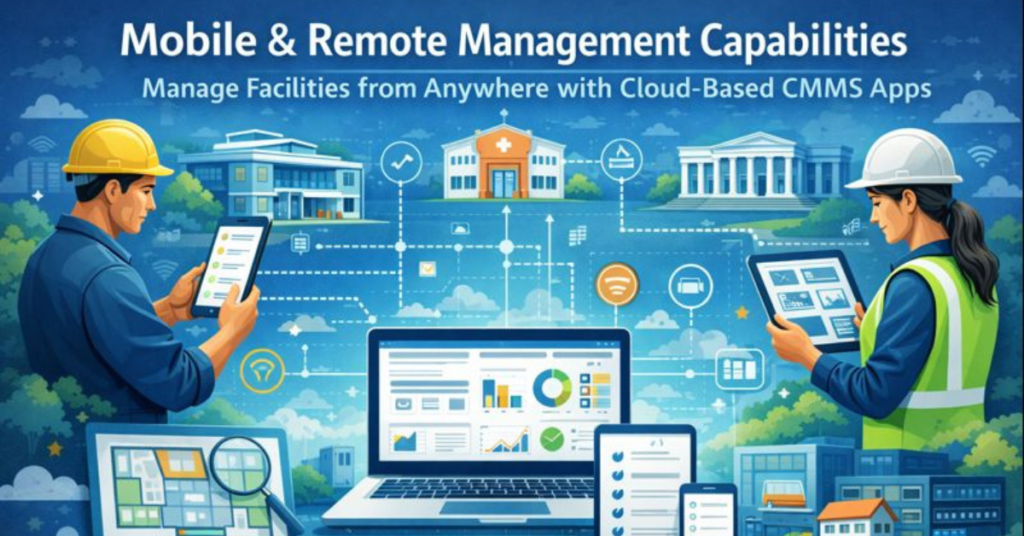
Mobile & Remote Management Capabilities
With teams spread across multiple locations, mobile access to facility data is essential. Cloud-based software offers mobile CMMS apps that allow technicians to update maintenance requests, complete mobile preventive maintenance, and track equipment monitoring in real-time.
Real-time work order updates
Technicians receive real-time updates on work order tracking, including task details, purchase order management, and equipment health indicators. This immediate access reduces response times, improves maintenance program efficiency, and supports maintenance operations across all facilities.
On-the-go reporting and dashboards
Managers can access reporting dashboards, track operational KPIs, and generate facility analytics while away from the office. This supports faster decision-making and helps maintain operational reliability.
Remote asset inspections
Using interactive asset mapping, teams can inspect assets remotely, complete inspection checklists, and update maintenance history logs. This reduces maintenance backlogs and ensures preventive maintenance tasks are completed on time.
Industry Applications and Case StudiesCloud-based
Cloud-based facility management software has applications across various sectors, improving maintenance program software, asset management, and maintenance operations.
Government facilities
Government organizations rely on regulatory compliance, work order management, and maintenance visibility to maintain critical infrastructure. Software assists in inspection checklists, maintenance documentation, and maintenance cost tracking while supporting facility uptime for public services.
Healthcare facilities
Hospitals and clinics use software to manage equipment maintenance, facility projects, and preventive maintenance tasks. Tracking asset condition, tracking,g and equipment lifecycle management ensures critical systems like HVAC, MRI machines, and emergency equipment remain operational.
Educational institutions
Schools and universities manage room reservations, maintenance scheduling, and asset tracking across multiple campuses. Interactive floorplans and mobile preventive maintenance help teams perform facility walkthroughs and track maintenance backlogs efficiently.
Hospitality and data centers
Hotels and data centers use condition monitoring and predictive maintenance to reduce equipment downtime. Maintenance insights, maintenance optimization, and facility scheduling software ensure guest safety and uninterrupted service.
Cost Savings, ROI, and Productivity Gains
Facility management software demonstrates measurable improvements in operational efficiency, maintenance program optimization, and maintenance cost reduction.
Reduced work order response time
Automated work order assignment, task tracking, and technician availability reduce response time by up to 40%, improving maintenance efficiency and facility uptime.
Annual productivity savings
By automating maintenance scheduling, mobile preventive maintenance, and maintenance documentation, organizations save significant labor hours, allowing teams to focus on high-priority tasks.
Operational efficiency metrics
Reporting dashboards provide insights on equipment downtime, asset condition tracking, and workflow configuration, allowing managers to track ROI, maintenance cost tracking, and operational KPIs.
Security, Compliance, and Safety Features
Maintaining safety inspections and regulatory compliance is a key feature of modern facility management software.
Incident reporting and alerts
The software provides condition-based alerts for equipment monitoring, notifying teams of equipment failure prediction, safety hazards, or maintenance backlogs.
Facility inspections & checklists
Teams complete inspection checklists digitally, recording findings and maintenance documentation. This helps reduce risk, maintain regulatory compliance, and support audit preparation.
Safety compliance tracking
Maintenance program software tracks all compliance tasks, including preventive maintenance tasks, certifications, and safety improvements. Automated work orders ensure no inspections are missed.
User Experience and Adoption
Cloud CMMS software emphasizes usability, ensuring facility teams can quickly adopt the system and benefit from maintenance program software.
Easy-to-use dashboards
Customizable reporting dashboards provide facility analytics and maintenance insights at a glance. Teams can track equipment performance, work order management, and task prioritization without confusion.
Mobile accessibility and user training
Mobile CMMS apps enable technicians to perform mobile work orders, submit maintenance requests, and access asset condition tracking from anywhere. Ongoing user training enhances adoption and reduces errors.
Satisfaction surveys and feedback
Feedback tools allow facility managers to measure technician satisfaction and improve workflow automation, maintenance efficiency, and mobile preventive maintenance processes.
How Cloud-Based Facility Management Software Transforms Your Business
Using cloud-based software transforms operations, giving organizations better visibility and control over assets and workflows.
Streamlined operations
All aspects of maintenance operations, asset tracking, and maintenance scheduling are managed in one platform, reducing maintenance backlogs and improving maintenance program efficiency.
Better decision-making
Facility analytics, maintenance reporting tools, and data-driven insights allow managers to make informed decisions about asset replacement planning, equipment lifecycle management, and capital planning software.
Scalability for multi-site facilities
Multi-site capabilities allow organizations to oversee multiple locations, track real-time asset data, and manage facility projects consistently across sites.
Choosing the Right Cloud-Based Facility Management Software
Selecting software depends on organizational needs, features, and long-term support.
Evaluating features vs business needs
Organizations should evaluate integration capabilities, workflow configuration, preventive maintenance, and predictive maintenance modules to align with operational goals.
Vendor support and reliability
Reliable vendors provide mobile access, facilities reporting software, and maintenance software tools that support maintenance efficiency and maintenance program optimization.
Implementation and onboarding tips
Proper onboarding ensures smooth adoption. Technician task management, mobile preventive maintenance, and work order tracking training help teams maximize the value of the software.
Stay ahead with Durostech Software Updates 2026 to unlock peak performance, enhance security, and maximize efficiency across all your systems.
Frequently Asked Questions (FAQs)
What is cloud-based facility management software?
Cloud-based facility management software is a digital platform that helps organizations manage their buildings, assets, and maintenance operations in one place. It allows teams to track work order management, schedule preventive maintenance, monitor equipment performance, and handle asset management from anywhere using a mobile CMMS app.
How does facility management software improve operational efficiency?
Facility management software streamlines maintenance operations by organizing maintenance requests, automated work orders, and task tracking. Teams can prioritize tasks, track equipment downtime, and access real-time asset data, which reduces delays and enhances maintenance efficiency.
Can cloud-based software reduce maintenance costs?
Yes, cloud-based facility management software reduces costs by optimizing maintenance scheduling, monitoring asset health indicators, and supporting preventive maintenance tasks. Organizations can avoid costly equipment failures, reduce spare parts management issues, and improve facility uptime.
What features should I look for in facility management software?
Essential features include work order management, preventive maintenance, asset management, interactive floorplans, mobile access, reporting dashboards, integration capabilities, and regulatory compliance tracking. These tools improve maintenance program efficiency and maintenance documentation.
How does predictive maintenance work in this software?
Predictive maintenance uses condition monitoring and real-time asset data to predict when equipment might fail. The software can trigger automated maintenance tasks or maintenance requests before failures occur, reducing equipment downtime and extending the asset lifecycle.
Can facility management software manage multiple sites?
Yes, modern cloud-based software offers multi-site capabilities, allowing teams to manage maintenance operations, track equipment monitoring, and schedule tasks across multiple locations from a single facility software platform.
How does mobile access help facility teams?
A mobile CMMS app enables technicians to access work order tracking, submit mobile preventive maintenance, update inspection checklists, and monitor equipment health indicators from anywhere. This improves maintenance efficiency and reduces delays.
How can software improve asset management?
Facility management software tracks asset lifecycle, maintenance history logs, and equipment performance tracking. Teams can plan asset replacement, manage spare parts, and schedule preventive maintenance tasks to ensure operational reliability.
Can the software integrate with existing systems?
Yes, it supports building management systems (BMS), SCADA, PLC, ERP, and accounting software integration. Integration allows teams to access real-time asset data, monitor energy management, and improve maintenance program optimization.
What role do reporting dashboards play?
Reporting dashboards provide facility analytics, track operational KPIs, monitor equipment downtime, and measure maintenance cost tracking. They help managers make data-driven decisions for maintenance program optimization and capital planning software.
How does the software help with regulatory compliance?
Facility management software ensuresthat safety inspections, inspection checklists, and maintenance documentation are recorded digitally. Automated work orders and audit preparation tools help teams meet regulatory compliance requirements efficiently.
Can facility teams handle work orders faster with this software?
Yes, automated work orders, workflow configuration, and task prioritization allow teams to assign tasks, track progress, and complete maintenance requests efficiently. This reduces maintenance backlogs and improves facility uptime.
How do interactive floorplans help facility teams?
Interactive floorplans show the exact location of assets, equipment, and rooms. Technicians can click on assets to view maintenance history logs, schedule maintenance tasks, or complete inspection checklists, improving maintenance visibility.
How does cloud software support energy management?
Integrated with building automation systems, the software monitors energy usage, tracks equipment performance, and identifies inefficiencies. This helps reduce energy costs while maintaining facility uptime and maintenance program efficiency.
How can facility management software boost ROI?
By reducing equipment downtime, improving maintenance program optimization, and enhancing operational efficiency, organizations save on labor and repair costs. Reporting dashboards, maintenance insights, and preventive maintenance tasks provide measurable cost savings and productivity improvements.
Conclusion
Future of facility management software
Cloud-based facility management software continues to evolve with AI-driven condition monitoring, predictive maintenance, and facility analytics, allowing organizations to reduce costs, improve operational reliability, and track equipment performance more accurately.
Why your organization should adopt it
Organizations using cloud-based solutions benefit from maintenance program software, asset management, maintenance cost reduction, and workflow automation. With tools like mobile CMMS apps, interactive floorplans, and reporting dashboards, facility teams gain efficiency, control, and visibility that traditional methods cannot provide.
Disclaimer:
“The content in this article is for informational and educational purposes only. It does not constitute professional advice. Readers should verify details independently and understand that results may vary depending on their organization’s unique circumstances.”
