
The world of blockchain mobile app development is rapidly evolving, pushing the limits of how mobile apps function and how data is managed across devices and users. Blockchain technology refers to a decentralized ledger that stores information across a distributed ledger system, allowing records to be added and verified by blockchain network nodes rather than a central authority. This guide explores how blockchain mobile apps are shaping the future of secure mobile services, including secure mobile payments, digital identity verification, and transparent transaction records.
This article will cover what blockchain mobile app development means, why developers are choosing it, how startups should evaluate it, the benefits and challenges, real-world blockchain use cases, best practices, key differences from traditional mobile apps, future trends, and final takeaways for developers and businesses.
What is Blockchain Mobile App Development?
The rise of blockchain mobile app development has been driven by increasing consumer demand for mobile app security, transparency, and data control. Traditional mobile apps usually rely on centralized servers, which create single points of failure and can expose sensitive user data if breached. Blockchain technology changes this model by using a decentralized database where every transaction is recorded on a public or permissioned blockchain, giving all participants access to immutable data and enabling peer-to-peer transactions without intermediaries. In a world where data breaches and privacy concerns are high, a blockchain mobile app offers a promising solution for protecting user information security while maintaining real-time access.
What is blockchain, and why does it matter in mobile apps?
Blockchain is a digital ledger system that records data in blocks linked in a chronological chain. Each block holds multiple mobile transaction records, and once data is recorded, it cannot be altered without agreement from the network. This characteristic makes blockchain applications valuable for secure data storage and secure transaction verification. For mobile apps, especially those handling financial information or personal identity, this means users can interact with blockchain-enabled apps with confidence that their information will remain safe and transparent. The integration of blockchain into mobile technology marks a shift from isolated, controlled databases to shared systems where all parties can verify the correctness of data independently.
Why Mobile App Developers Are Choosing Blockchain?
Many developers now see blockchain technology as more than just a backend novelty. It provides solutions to some of the biggest challenges in mobile app development, such as data trust, security, and transparency. Developers building blockchain app solutions can deliver secure mobile payments, peer-to-peer payments, and blockchain mobile security that traditional server-based apps struggle to match.
Key advantages over traditional mobile storage
Traditional mobile storage systems are centralized, meaning data is held in one place and managed by a single entity. This can expose apps to security vulnerabilities and performance bottlenecks. With blockchain, the distributed ledger approach spreads data across blockchain network nodes. This reduces the risk of a single point of failure and makes the system more resilient. In mobile-first blockchain environments, apps can rely on multiple replicas of data, which helps with mobile app efficiency and blockchain trust network benefits that traditional systems cannot provide.
Security, transparency, and immutability benefits
Security is a major reason mobile app developers are choosing blockchain. Because of how blockchain records are structured, data is nearly impossible to tamper with without consensus. Features like blockchain, mobile app security, and immutable data ensure that once a record is written, it cannot be changed without everyone’s agreement. This brings mobile app blockchain transparency benefits as every transaction is visible and traceable, making fraud or unauthorized changes easier to detect. For apps involving cryptocurrency transactions or mobile banking apps, this level of security and visibility is very attractive.
Evaluating Blockchain for Your Startup App
Before building a blockchain mobile app, startups should carefully think about whether blockchain fits their goals. While the technology offers many advantages, not every app needs a decentralized ledger or blockchain integration.
How to check suitability for your application
Startups should begin by analyzing the main functions of their app and determining if those functions require blockchain-based services. Questions startups should ask include: Does the app involve peer-to-peer transactions without trusted intermediaries? Will the app benefit from blockchain tracking systems where data must remain secure and visible? Does the app handle financial or identity data that could benefit from blockchain digital identity or secure transaction verification? If the answer to these questions is yes, then blockchain may provide value.
Factors to consider before integration
When thinking about building blockchain mobile apps, startups must consider several factors. One is the availability of developers skilled in blockchain application development and mobile blockchain adoption. Another is whether the performance and speed of a decentralized system will serve the app’s users well, since blockchain data storage can be heavier than traditional databases. Costs can be another concern, as implementing blockchain mobile solutions may require more resources upfront compared to standard app development. These are decisions every app development startup team must review before moving ahead.
As powerful technologies like quantum computing advance in 2024, blockchain mobile app development will continue evolving alongside next-gen innovations
Pros of Blockchain Mobile App Development
There are many reasons blockchain mobile integration is attractive for modern apps. It offers improvements in security, data transparency, and process automation that traditional systems struggle to match.
Distributed and decentralized architecture
Blockchain decentralized apps operate over a network of independent machines where each one keeps a copy of the data. This distributed mobile apps model removes any need for central servers, providing resilience to outages or attacks. For users, this can mean uninterrupted access and higher trust in the app’s infrastructure.
Security & immutability
One of the strongest advantages is that data recorded on blockchain is immutable. That means once transactions are added to the chain, they cannot be altered or removed. This adds an additional security layer for apps handling sensitive data or cryptocurrency wallet apps, where trust is essential. The built‑in cryptography significantly strengthens mobile app blockchain security protocols beyond what traditional databases offer.
Transparency and traceability
Blockchain’s design also offers transparent blockchain network benefits, letting all permitted users view transaction history without changing it. This transparency builds trust and supports compliance efforts for industries such as finance, healthcare, and government services.
Efficiency & speed improvements
Although blockchain is often seen as slower in some contexts, blockchain mobile apps that use smart contracts and automated processes can enhance mobile transaction efficiency and reduce manual steps. These smart contract apps can trigger actions based on predefined rules, lowering the need for human intervention and making operations smoother.
Cons and Challenges of Blockchain in Mobile Apps
Despite many advantages, blockchain mobile app development is not without challenges. Some developers and businesses find that the technology requires careful planning and trade‑offs.
Performance overhead and scalability issues
Blockchain systems can be slower at processing data than traditional servers because consensus must be reached across multiple nodes. This can cause performance strain for apps with high transaction volumes. Some blockchain platforms struggle with blockchain scalability, meaning they may slow down as more users join the network.
Development complexity and cost
Developing a blockchain mobile app takes specific skills and expertise that many developers are still learning. The time and cost involved in building and maintaining a secure and reliable blockchain app can be higher than for traditional apps. For small startups or projects with tight budgets, this may be a barrier.
Battery and resource consumption
Because blockchain relies on constant communication with the network and sometimes heavy computation, it can drain device batteries faster and use more of a mobile device’s resources than standard apps. This can affect app performance, especially on older or less powerful devices.
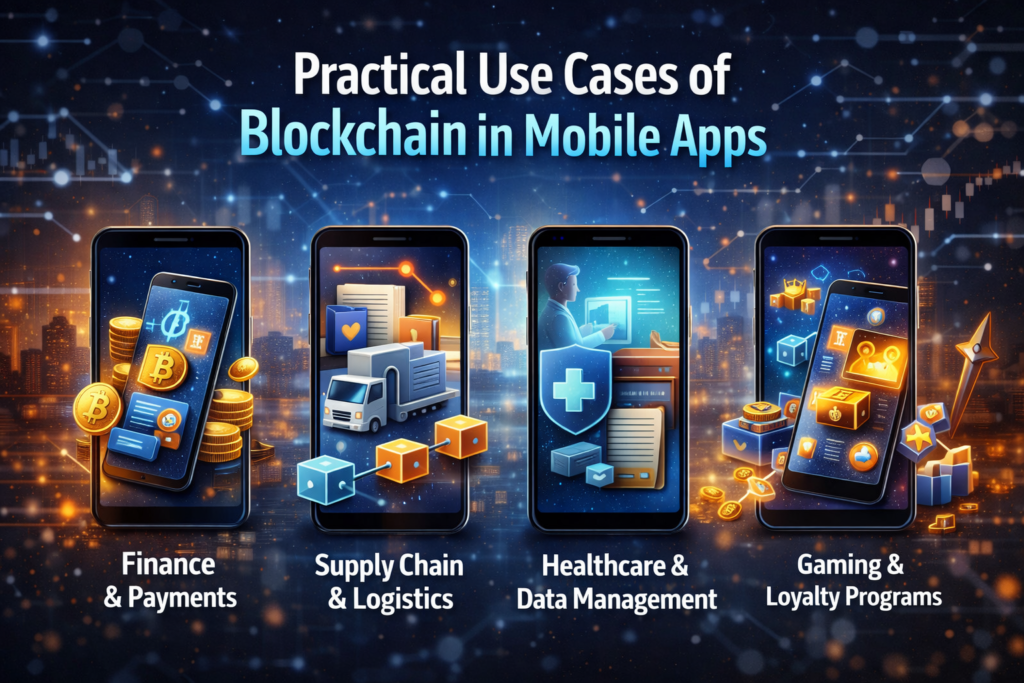
Practical Use Cases of Blockchain in Mobile Apps
Blockchain technology has become part of many solutions that reach real users. Mobile apps paired with blockchain have been introduced across industries.
Finance & Payments
In finance, blockchain-based payments and mobile wallet apps allow users to transact without relying on banks or traditional institutions. These apps support peer-to-peer transactions and manage cryptocurrency transactions directly on users’ mobile devices or linked interfaces, increasing convenience and security.
Supply Chain & Logistics
Supply chains benefit from transparent records. Supply chain blockchain apps allow all participants to see status updates, verify product information, and reduce fraud. This benefit of blockchain transparency supports better tracking and trust across businesses and consumers.
Healthcare & Data Management
Healthcare apps have adopted blockchain mobile integration to protect patient records and enable secure mobile data storage. When combined with privacy safeguards, these blockchain healthcare apps allow hospitals, patients, and insurers to exchange information safely.
Gaming & Loyalty Programs
In gaming, blockchain apps can record ownership of digital assets and reward players with tokens that have real economic value. Blockchain mobile ecosystem efforts make it possible for users to claim ownership of in‑game items, boosting engagement and enhancing mobile app efficiency.
Best Practices for Developing Blockchain Mobile Apps
Developing a blockchain mobile app requires a thoughtful approach to architecture, tools, and ongoing education.
Utilizing open‑source frameworks effectively
Using blockchain open source platforms like Hyperledger, Stellar, or Ethereum client tools can help developers build reliable apps faster. These tools lower barriers and promote shared innovation across the blockchain ecosystem.
Staying updated with the latest blockchain tech
Because blockchain technology adoption changes quickly, staying current with advancements improves apps’ security and functionality. This includes tracking improvements in consensus mechanisms, blockchain security protocols, and new platforms optimized for mobile.
Ensuring relevance and purpose for your business
Not every mobile app needs a blockchain component. Developers and businesses should use blockchain only when it solves business challenges like mobile payment security, transparent transaction records, or blockchain digital identity verification. Unnecessary use can add complexity without real benefit.
Comparison with Traditional Mobile App Development
Comparing mobile app blockchain projects with traditional ones helps teams see the trade‑offs between old and new approaches.
Blockchain vs Mobile Storage
Traditional mobile apps store data in centralized databases. This can be efficiebut it it exposes user data to risks if the server is compromised. Blockchain data storage distributes records across a distributed ledger, improving trust and reducing single points of failure.
Blockchain vs Mobile Performance
Traditional apps often provide faster performance because they do not require network‑wide consensus for changes. Blockchain mobile apps, depending on how they are built, may face slower operations due to verification tasks across nodes. This can affect speed, but may be acceptable when the priority is trust and transparency over raw performance.
Just like major mobile marketing breakthroughs are reshaping user engagement, blockchain mobile apps are redefining trust, security, and transparency.
Future of Blockchain Mobile App Development
The future ofthe blockchain mobile ecosystem looks promising as adoption grows in sectors from finance to identity.
Trends to watch in 2026
By 2026, blockchain trends indicate that more apps will use blockchain integration benefits such as transaction automation, smart contract apps, and blockchain-based digital identity for services like secure logins or government verification. These advances will broaden the ways mobile apps serve users.
Opportunities for startups and businesses
Startups and businesses can benefit from blockchain adoption strategies by building apps that provide mobile-first blockchain experiences. Opportunities include identity verification apps, blockchain real estate apps, and blockchain insurance apps that offer users trust and transparency.
Frequently Asked Questions (FAQs)
What is blockchain mobile app development?
Blockchain mobile app development is the process of creating mobile applications that use blockchain technology to securely store data, process transactions, and ensure transparency. These apps use a distributed ledger to manage information across multiple devices, making them ideal for secure mobile payments, peer-to-peer transactions, and blockchain-enabled apps.
How does blockchain improve mobile app security?
Blockchain enhances mobile app security by storing data on a decentralized database that is tamper-proof. Each transaction is encrypted, verified by blockchain node verification, and recorded as immutable data, which prevents fraud and ensures secure transaction verification.
What are the main benefits of blockchain in mobile apps?
The main benefits of blockchain mobile apps include enhanced security, transparent transaction records, mobile transaction efficiency, user information security, peer-to-peer payments, and support for digital identity verification. These advantages make apps more reliable for users and businesses.
Can blockchain be used in mobile banking apps?
Yes, mobile banking apps can integrate blockchain protocols to offer secure mobile payments, transparent transaction records, and blockchain-based digital identity verification. This ensures faster, safer, and more trustworthy financial transactions for users.
What industries benefit most from blockchain mobile apps?
Industries such as finance, healthcare, real estate, supply chain, insurance, and gaming benefit from blockchain-enabled apps. They use features like mobile wallet apps, blockchain-based payments, blockchain document verification, and identity verification apps to improve app performance and data security.
What are smart contract apps in mobile blockchain development?
Smart contract apps are mobile applications where blockchain automatically executes pre-set rules for transactions or agreements. They improve transaction automation, reduce intermediaries, and provide secure transaction verification for blockchain-powered apps.
Is blockchain mobile app development costly for startups?
Developing blockchain mobile apps can be more expensive than traditional apps due to blockchain integration, secure mobile payments, and distributed ledger management. However, startups can reduce costs using blockchain open-source platforms and focus on cost-effective solutions.
How does blockchain impact app performance?
Blockchain mobile integration can affect app performance because verifying transactions across blockchain network nodes requires more computing power. Optimizing mobile interface integration and using hybrid blockchain mobile solutions can maintain efficiency without slowing down the app.
Can blockchain mobile apps store user data securely?
Yes, blockchain mobile apps offer secure data storage through decentralized databases and immutable data records. Users’ information is protected against hacks, and sensitive data can be verified without exposing personal details.
What are the challenges of blockchain in mobile apps?
Challenges include battery and resource consumption, development complexity, scalability limitations, and potentially slower performance due to the distributed mobile apps architecture. Careful blockchain implementation strategies help address these issues.
How do blockchain mobile apps support peer-to-peer payments?
Blockchain mobile apps facilitate peer-to-peer payments by allowing direct transactions between users without intermediaries. These apps provide transparent blockchain networks, mobile transaction records, and secure transaction verification for seamless payments.
Are blockchain apps only for cryptocurrency transactions?
No, while cryptocurrency transactions were the first use case, blockchain applications now support mobile banking apps, digital identity verification, blockchain real estate apps, and blockchain insurance apps. They focus on mobile app security and transparent transaction records beyond digital currency.
What is a distributed ledger in mobile app development?
A distributed ledger is a database replicated across multiple devices, ensuring every participant can access and verify data. In a mobile app blockchain, this guarantees blockchain transaction transparency, immutable data, and secure mobile payments.
How can startups integrate blockchain into their apps?
Startups can integrate blockchain technology by using blockchain open source frameworks, focusing on mobile wallet apps, smart contract apps, and blockchain-enabled services that match business needs. Evaluating blockchain adoption strategies ensures mobile app blockchain benefits without unnecessary complexity.
What does the future hold for blockchain mobile apps?
The blockchain mobile ecosystem is growing with trends in mobile-first blockchain, digital identity verification, blockchain-based payments, and blockchain app integration. Startups and businesses that adopt blockchain mobile solutions now can benefit from blockchain adoption trends and improved mobile transaction efficiency.
Conclusion
Blockchain mobile app development continues to grow as developers and businesses seek better ways to protect data, give users more control, and improve transparency in mobile interactions. While it comes with challenges like scalability and development complexity, the advantages in security, traceability, and potential new business models make it a powerful option for many modern apps.
Key takeaways for developers and businesses
Developers and business leaders should focus on how blockchain technology can solve real needs like mobile payment security, secure transaction verification, and digital identity verification rather than adopting it just because it is new. When implemented thoughtfully, blockchain mobile solutions can improve user trust, support new digital experiences, and help companies stand out in a crowded mobile marketplace.
Disclaimer:
The information in this article is for educational purposes only. It does not constitute personal advice. Blockchain mobile app development involves risks, and readers should conduct independent research and consult professionals before making decisions.