
Contracts are foundational to how businesses operate in the United States. They set expectations, define rights and responsibilities, and shape how parties work together in agreements such as vendor agreements, partnership agreements, employment contracts, lease agreements, and non‑disclosure agreements. When businesses use a business contract review system, they reduce legal risks, prevent financial losses, and protect business interests. A thorough contract review process helps with contract clarity, contract terms clarity, contract oversight, and strengthens contract enforcement and dispute resolution.
This article will provide detailed explanations of what business contract review is, the steps involved, the risks of inadequate review, and how to improve contract review using standard practices and advanced tools such as contract automation, contract review software, and AI‑powered review solutions.
What Is Business Contract Review?
Business contract review is the act of examining every part of a contract to confirm that the contract terms, contract clauses, and contract obligations are clear, fair, and aligned with the goals of the business. This includes checking that rights and duties are properly stated, that contract obligations management practices are in place, and that legal requirements are met before signing.
Definition and Purpose
The business contract review process is designed to check a contract’s structure and language to reduce risk and increase clarity. A review involves examining the standard clauses, confidentiality clauses, termination clauses, dispute resolution sections, and other key provisions. This type of review is usually done by professionals, such as a contract review lawyer or a legal team with a background in contract drafting and contract analysis. An attorney review helps identify weak spots in contract documentation, correct contract errors, and confirm that the contract follows legal compliance requirements.
When Businesses Need Contract Review
Businesses need a business contract review whenever they are about to enter into legally binding agreements. This includes commercial agreements, vendor agreements, employment contracts, partnership deals, or leases. A business that uses contract review best practices before signing any agreement gains a clearer understanding of the commitments involved, reduces the chance of contractual disputes, and improves contract risk assessment. For example, a new vendor agreement may contain obligations that a company is not prepared for without review.
Risks of Inadequate Business Contract Review
When a business skips or rushes a contract review, it opens the door to legal oversight, operational disruption, and serious financial consequences. Ignoring a thorough review can lead to vulnerabilities in contract performance, unclear terms, and gaps in legal protection.
Legal Disputes and Financial Losses
A poorly reviewed contract can contain vague contract clauses, unclear contract obligations, or missing protections against breaches. These flaws can lead to disagreements and contractual disputes that require costly legal action to resolve. Misunderstood terms can generate expenses, delays in delivery, or even complete breakdowns in relationships with partners. When critical provisions such as termination clauses or dispute resolution processes are missing or vague, disputes can become protracted and expensive.
Missed Opportunities and Compliance Issues
If key aspects of contracts go unnoticed due to inadequate review, companies may miss opportunities to secure better terms or secure compliance advantages. For instance, failure to spot a legal compliance issue early could expose a business to penalties from regulatory bodies. A review that neglects to examine the rights and responsibilities of each party can leave one side unfairly burdened. This threatens the company’s operational stability and could affect future business growth.
Key Elements a Business Contract Attorney Examines
A skilled contract review lawyer or attorney focuses on elements of the contract that directly affect rights, duties, risks, and enforceability. These elements shape how the contract functions and protect the business’s interests.
Standard Clauses
Standard clauses define basic but important parts of the contract. These include deadlines, payment terms, responsibilities, confidentiality, and more. A professional look at these clauses helps with contract terms clarity, contract compliance review, and helps identify language that might expose the business to unnecessary risk.
Rights and Responsibilities
Every contract spells out what each party must do or refrain from doing. Reviewing the rights and responsibilities ensures that both sides have a shared understanding of performance expectations, deadlines, and consequences for non‑performance. This helps create clear, fair contract obligations management.
Risk Assessment and Liability
A key part of the review is checking who holds risk and how much liability one party has compared to the other. A contract risk assessment helps a business see whether some obligations may expose it to undue damages or penalties. Lawyers help identify these problem areas early and suggest fairer terms.
Explore how Ultimate Enterprise Software Development Services can streamline processes and enhance contract management for better business outcomes.
Common Types of Business Contracts Requiring Review
Contracts come in many forms, and some are more likely to cause issues if not reviewed carefully. Recognizing the common types of agreements that require careful evaluation is essential.
Commercial Agreements
Commercial agreements are contracts between businesses for services, goods, or joint activities. These often define payment terms, delivery schedules, quality expectations, and more. A business contract review checks for clarity and fairness so that neither party is disadvantaged.
Employment Contracts
Employment contracts define compensation, job duties, working conditions, and what happens if the employee leaves. They must also comply with local and federal employment laws. Reviewing these contracts with a focus on contract compliance automation and a contract obligations checklist ensures that the employee contract does not inadvertently violate worker protections.
Partnership and Vendor Agreements
Partnership agreements define ownership shares, profit distribution, and resolution of disagreements. Vendor agreements outline obligations for suppliers or service providers. These need careful review because gaps in these agreements can result in disputes or missed expectations during execution.
Benefits of a Thorough Business Contract Review
A thorough business contract review brings clarity where uncertainty once existed and protects companies from unforeseen issues that can erode profits or harm reputation.
Prevent Costly Mistakes
When each part of a contract is checked carefully, errors and vague language are identified before signing. This stops mistakes such as unclear deliverables, misinterpreted obligations, or missed legal requirements. A careful review saves time and money before problems appear.
Safeguard Business Profits
Contracts with unfair or unclear clauses can silently reduce profits through penalties or unfavorable terms. Reviewing a contract helps protect a company’s bottom line by making sure revenue streams and obligations are fairly represented and legally sound.
Strengthen Negotiation Position
A strong business contract review means a company is prepared to negotiate improvements to contract terms that benefit its goals. Understanding possible risks and opportunities within an agreement gives a business confidence to negotiate effective changes.
Step‑by‑Step Business Contract Review Process
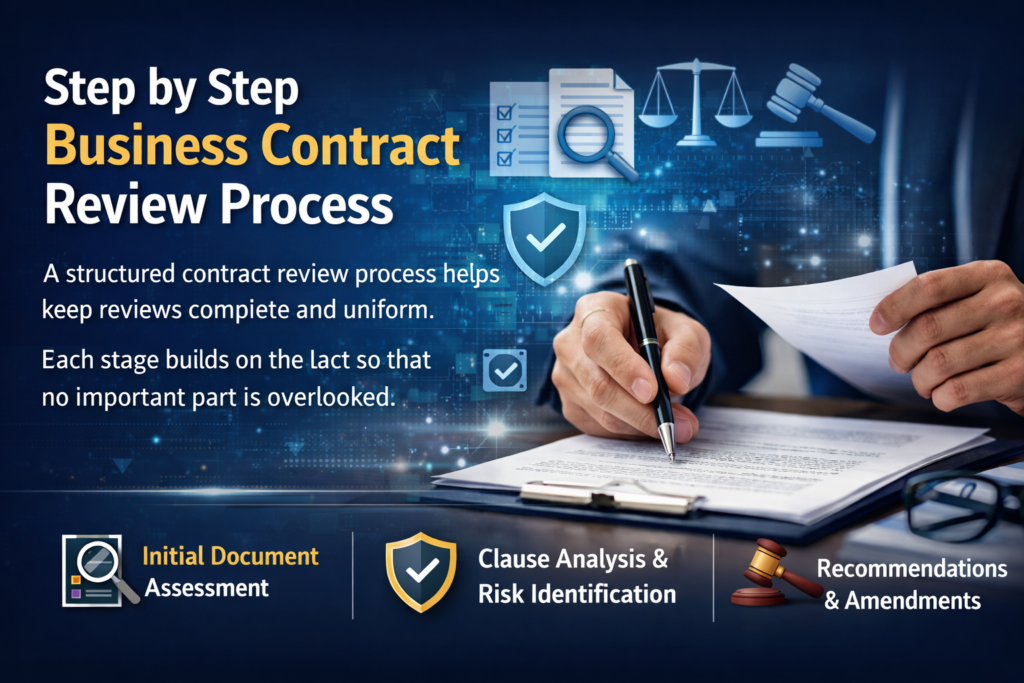
A structured contract review process helps keep reviews complete and uniform. Each stage builds on the last so that no important part is overlooked.
Initial Document Assessment
At this stage, the reviewer reads the whole contract to see what the agreement covers and flags obvious concerns. This high‑level look gives a context for deeper review and frames how obligations must be handled.
Clause Analysis and Risk Identification
This part focuses on individual contract clauses to determine exposure to liability, unclear expectations, or gaps in protection. Here, risk identification and evaluation of key provisions like termination clauses and confidentiality clauses take place.
Recommendations and Amendments
Once issues are identified, the reviewer suggests changes that improve fairness, compliance, and clarity. These changes might include clearer language, balanced obligations, or more solid risk allocation. A professional may assist with contract negotiation to get these amendments accepted.
How to Improve Your Contract Review Process
Improving the contract review process helps companies be more reliable and consistent. Adding tools and reliable methods helps teams catch more issues before they become problems.
Using Checklists and Templates
A contract review checklist gives reviewers a list of items to confirm, reducing the chance that a key part gets missed. Templates also help maintain review consistency across agreements so that all contracts follow the same guidelines.
Leveraging Legal Technology Tools
Advances in technology offer tools that assist in contract evaluation. Contract review software and AI contract solution platforms help automate routine parts of review, flag unclear terms, and provide efficient contract monitoring. These tools help reduce human error and support contract compliance automation.
How Contract Review Supports Business Growth
Contracts are not only legal tools but also instruments that can support prosperity when structured well.
Building Trust With Partners
When partners see that obligations are clear and fair, they gain confidence in working together. This builds stronger, longer‑lasting relationships that support future business ventures.
Ensuring Compliance and Reputation
Contracts that follow legal standards help a business maintain a positive reputation. Good contract practices show clients, partners, and regulators that a business follows laws and values ethical conduct.
How an Attorney Can Help With Business Contract Review
A legal expert brings experience and attention to detail that most internal teams might lack. An attorney’s review adds a level of protection and insight that matters.
Legal Expertise and Risk Mitigation
A contract review lawyer brings years of legal education and experience to spot risks and help shape agreements that meet legal standards. Attorneys reduce risk by checking for hidden liabilities and unclear clauses.
Negotiation Support and Amendments
Beyond just pointing out problems, attorneys help businesses negotiate better terms. They know how to position suggested amendments to improve fairness or align with strategic goals.
Contract Review Checklist for Commercial Agreements
A contract review checklist outlines items that reviewers should consider. These include checking that the contract clearly states purpose, timelines, obligations, and legal conditions.
Sample Checklist and Practical Tips
A good checklist covers the basics,s such as confirming key actions, deadlines, proper legal terms, and agreements about enforcement and compliance. This helps both new and experienced reviewers approach each contract in a consistent and reliable way.
Sample Contract Review Checklist Table
| Checklist Item | What to Review |
| Agreement Purpose | Confirm clear objectives |
| Contract Terms | Check that obligations are stated clearly |
| Confidentiality Clauses | Review protection for shared information |
| Termination Clauses | Confirm fair rights to end the agreement |
| Risk Allocation | Confirm how risks are shared or divided |
Common Mistakes to Avoid in Business Contract Review
Even careful reviewers can miss things, especially when they skip long text or assume something is obvious.
Overlooking Critical Clauses
Some contracts bury important clauses, es such as indemnity or dispute resolution, deep within long text. Missing these can expose a business to unnecessary risk or unexpected costs.
Ignoring Small Print and Legal Jargon
Many contracts have long, detailed sections that seem unimportant at first glance. These sections often contain hidden obligations or restrictions. A thorough review brings theseto lighth,t so the business is not surprised later.
Leverage Offshore Software Development Services to scale faster while ensuring your contracts stay compliant and risk-free in every agreement.
Frequently Asked Questions (FAQs)
What is a business contract review?
A business contract review is the process of examining a contract to make sure all contract terms, contract clauses, and contract obligations are clear, fair, and legally enforceable. This helps businesses prevent financial losses, legal disputes, and operational disruption.
Why is a business contract review important for companies?
Reviewing contracts protects a business from legal risks and contract errors. It ensures that agreements like vendor agreements, partnership agreements, and employment contracts comply with legal compliance standards while supporting business interests.
Who should perform a business contract review?
A contract review lawyer or an experienced attorney should handle the review. They provide legal oversight, identify contractual obligations, and ensure proper risk allocation in all commercial agreements.
What are the risks of not reviewing a business contract?
Without a proper review, businesses may face contractual disputes, financial losses, compliance issues, or unclear contract obligations that can cause delays and damage relationships with partners.
What key elements does a business contract attorney examine?
A professional examines standard clauses, rights and responsibilities, risk assessment, termination clauses, confidentiality clauses, and dispute resolution sections to protect the business from contract liability.
What types of contracts need a business contract review?
All contracts benefit from review, especially commercial agreements, employment contracts, vendor agreements, partnership agreements, lease agreements, and non-disclosure agreements (NDAs).
How does a contract review help prevent financial losses?
By checking for contract errors, ambiguous clauses, and legal oversights, a business contract review reduces the chance of penalties, litigation costs, and unfulfilled obligations that could harm a company’s revenue.
Can a contract review improve business growth?
Yes. Clear, well-reviewed contracts support business growth by strengthening partnerships, ensuring legal compliance, reducing disputes, and improving trust with clients and vendors.
What is included in a contract review checklist?
A contract review checklist includes verifying contract clarity, reviewing contract obligations, assessing risk allocation, checking contract terms, and confirming compliance with legal documentation standards.
How do confidentiality clauses work in a business contract review?
Confidentiality clauses protect sensitive business information. During a review, a contract review lawyer checks that these clauses clearly define what information is confidential, how it can be used, and the consequences of breaches.
What role do termination clauses play in contract review?
Termination clauses specify how and when a contract can end. Reviewing them ensures the business can exit agreements safely without unnecessary penalties or operational disruption.
How can technology improve the contract review process?
Modern contract review software and AI-powered review tools can help automate contract monitoring, flag contract errors, and track contract obligations efficiently. This improves review consistency and the legal oversight process.
How long does a business contract review take?
The time depends on the complexity of the contract. Simple agreements might take a few hours, while detailed commercial agreements or partnership contracts may require several days for thorough contract evaluation and contract analysis.
Can a contract review lawyer assist with negotiations?
Yes. A lawyer can help suggest amendments, improve contract terms, and negotiate with the other party to ensure that agreement obligations are balanced and aligned with the company’s goals.
How often should a business review its contracts?
Contracts should be reviewed before signing and regularly throughout the contract lifecycle, especially for renewals or changes in business conditions. Regular contract auditing ensures ongoing contract compliance, contract performance, and risk management.
Reach Out for Professional Business Contract Review Services
A final check by a contract review lawyer or legal team gives a business confidence that the agreement is strong, compliant with laws, and aligned with business goals. Professional review protects profits, clarifies terms, and reduces uncertainty before a contract is signed. This step is a safeguard that improves how your business manages legal agreements and protects its future success.
Disclaimer:
“This article is for educational purposes only and provides general information about business contract review. It does not constitute legal advice. Readers should consult a qualified contract review lawyer or attorney for guidance specific to their situation, as using this information without professional consultation may involve risks.”