

Most new crypto investors make the same mistake. They send a payment, see one confirmation pop-up, and assume the money is safe. But unfortunately, the system can reverse the transaction at any time.
Generally, cryptography secures every transaction on the blockchain and verifies who owns what. But a lot can still go wrong in the seconds after a transaction is sent. To prevent that, CryptoRoo breaks down crypto basics that explain what happens to your funds after you send them.
In this article, you’ll learn:
- How the confirmation process works
- What the security risks are at each stage
- How confirmation counts should influence the way you move funds
Let’s start with the most common misconception new investors carry into their first transaction.
Crypto Basics Most Beginners Get Wrong

Most users consider one confirmation enough for smaller transfers because it shows the transaction has entered the blockchain. With only one confirmation, the blockchain has added just one block after your transaction, so the network can still reverse it relatively easily.
Think of it like a witness signature on a legal document. One signature carries some weight, but a panel of ten makes it nearly impossible to contest. Similarly, every new block stacks validation on top of the validation until the transfer becomes practically irreversible.
So why does the number keep changing across different digital assets and exchanges? Because no single rule governs how many confirmations make a transaction final. Each blockchain (e.g., Bitcoin, Ethereum, and smaller coins) sets its own confirmation standard based on how its network processes and secures transactions.
Beyond the blockchain itself, exchanges and brokerage firms can set their own confirmation thresholds before crediting a deposit.
How Confirmations Actually Work on the Blockchain
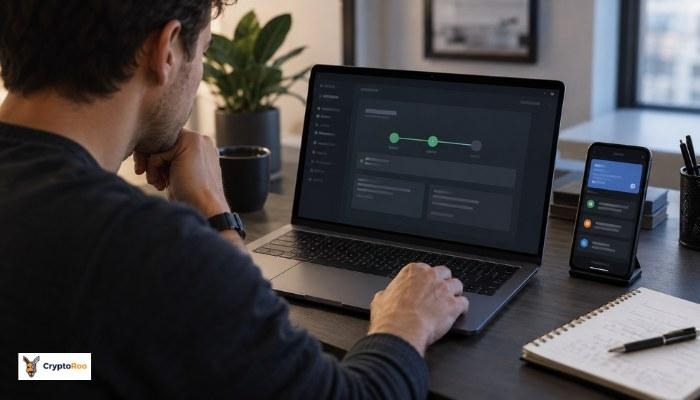
We’ve already mentioned that every confirmation is a new block added to the chain after yours, and each one makes your transfer harder to reverse. But most investors have no idea what’s actually happening behind the scenes between hitting send and watching those confirmations stack up.
Let’s have a look at what the process looks like from the inside.
What Happens After You Hit Send
After you hit send, your transaction first lands in a space called the mempool (think of it as a waiting room for transactions) rather than going straight to the blockchain.
From there, miners or validators select transactions for inclusion in the next block depending on the network’s consensus system (Proof-of-Work or Proof-of-Stake). Then they bundle your transaction into a block with other pending transfers.
Finally, the network cryptographically links each new block to the previous one, which gives your transaction its first confirmation.
For example, miners produce a new Bitcoin block roughly every 10 minutes. So your transfer sits waiting during this period. Eventually, the chain keeps growing, and every new block the network adds after yours makes the process more complete and secure.
Why One Confirmation Isn’t Always Enough
Honestly, the system can reverse one confirmation even if a competing chain grows longer than yours and overtakes it. That’s called a double-spend attack. And it’s one of the red flags serious investors watch for in volatile markets.
In terms of numbers, the difference between 1 and 6 confirmations can mean thousands of dollars on a large transfer. So, higher-value moves demand more confirmations ahead of releasing your funds. And investors who buy, sell, or trade frequently feel this risk the most.
For context, Bitcoin requires anywhere from 3 to 6 confirmations before most exchanges consider a transfer safe, with 6 being the gold standard.
Ethereum works differently after its move to Proof of Stake in 2022. Instead of relying on a simple confirmation count, the network uses validator checkpoints to determine when transactions become final. Exchanges may still set their own confirmation requirements before crediting deposits.
Other cryptocurrencies sit somewhere in between, each following their own network security rules.
Risk Tolerance and Asset Allocation: Why Confirmation Count Matters
The fewer confirmations a transaction has, the easier it is to reverse or double-spend. At times, this one risk can directly influence how you move money, which assets you hold, and how much exposure you’re comfortable carrying at any given time.
The table below shows how risk scales with transfer size:
Low-Value Transfers vs. High-Stakes Moves
Not every transfer carries the same risk. The dollar amount behind a move changes how many confirmations you actually need to consider the transaction safe.
| Transfer Size | Risk Level | Confirmations Needed | Common Mistakes |
| Under $1,000 | Low | 1–3 | Treating unconfirmed transfers as final |
| $1,000–$10,000 | Medium | 3–6 | Skipping confirmations during price volatility |
| Over $10,000 | High | 6+ | Moving funds before full validation, ignoring red flags |
These security risks don’t just stop at double-spend attacks. Loss of private keys, exposure to scams, and the risk of price volatility all add layers alongside confirmation-related losses.
Based on what we’ve seen with new investors, risk tolerance tends to go out the window the moment markets move quickly. For example, someone buying during a price spike may skip extra confirmations to access their funds sooner. That’s one of the costliest mistakes in crypto investing.
How Brokerage Firms and Exchanges Set Their Own Rules
Each platform determines its own threshold by weighing the coin’s block time, transfer size, and its own internal security model. That calculation happens entirely on their end, independent of what the blockchain itself requires, so the numbers aren’t always visible upfront.
For example, Coinbase requires between 3 and 6 confirmations for a Bitcoin deposit, depending on the transfer size and network conditions at the time. Some platforms set higher thresholds for larger transfers, which require more confirmations before crediting the deposit.
When a deposit takes longer to appear, the exchange may still be waiting for its required number of blockchain confirmations. Knowing that threshold explains delays before you need to contact support.
For a side-by-side breakdown of how major exchanges compare, you can browse CryptoRoo. We publish exchange comparison guides covering deposit rules and verification requirements across major exchanges.
Building an Investment Strategy Around Transaction Finality
Transaction finality tells you when your funds have enough confirmations to use with confidence. For investors, the timing of confirmation can affect decisions about transferring, trading, or withdrawing digital assets.
Here’s how confirmation awareness fits into a broader plan.
- Factor Finality Into Timing: Most new investors plan entry and exit points around price alone. However, that plan can fall apart when confirmation delays leave your capital pending for 30 minutes or longer. In this case, accounting for confirmation delays can help you avoid mistiming your trades.
- Match Asset Allocation to Speed: Bitcoin’s 10-minute block time works fine for long-term holders who buy and hold positions over months. But for active traders, coins with shorter confirmation windows, like Litecoin at 2.5 minutes per block, can reduce transfer delays between trades. You can also mix both into your portfolio to balance security with speed.
- Use Platform Tools Wisely: Real-time confirmation trackers show how far your transaction has progressed, while push notifications can alert you once it clears. Checking these tools helps you avoid sending another transfer while the first is still processing.
Sticking to these habits won’t eliminate volatility or guarantee performance. But they can help you avoid preventable transaction losses while learning how the network works. And the earlier you build them in, the less you’ll have to unlearn later.
You Know the Myth. Now Trade Wisely.
Blockchain confirmations aren’t a formality. Each one adds a real layer of protection between your funds and a potential reversal, and skipping that wait has cost investors money.
The number you need depends on what you’re moving, how much, and which platform holds your account. Those three factors alone change everything about how you approach a transfer.
Before your next buy or sell, run through what you’ve learned here. And if you’re still figuring out which exchange fits your investing style, CryptoRoo’s comparison guides break down the details so you don’t have to dig through pages of fine print.
