
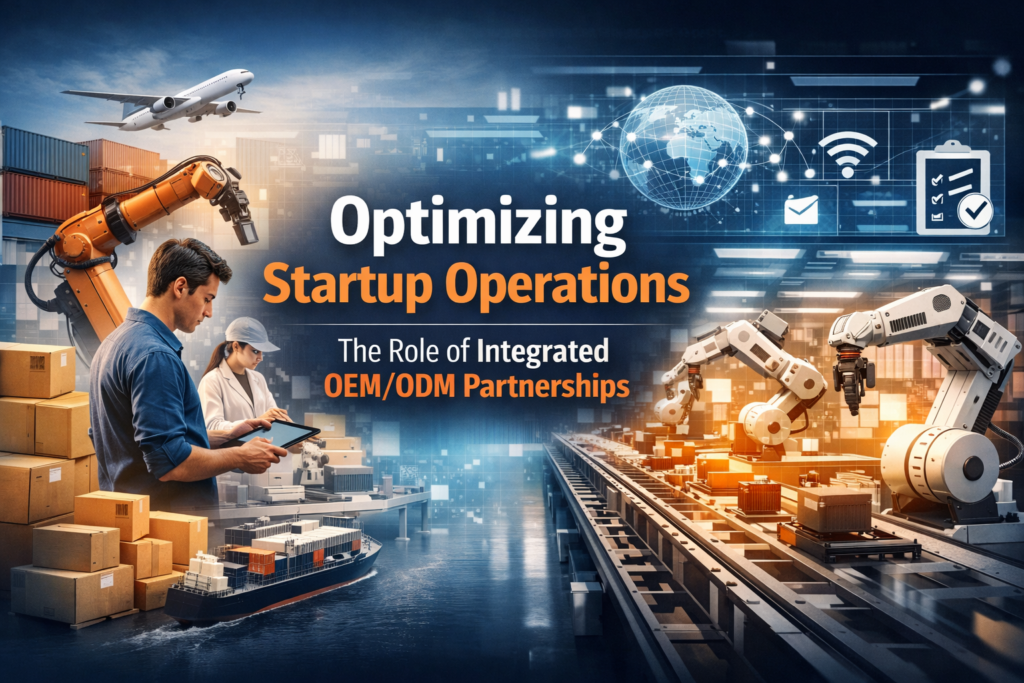
Optimizing Startup Operations through integrated OEM/ODM partnerships helps brands reduce costs, scale faster, improve quality, and focus on growth. In the hyper-competitive Direct-to-Consumer (D2C) landscape, the traditional model of owning the entire production line is becoming a strategic liability. For modern startups, operational agility is the primary currency. By shifting from a heavy-asset approach to a lean manufacturing strategy, founders can redirect capital toward brand building and customer acquisition.
The Shift Towards Lean Manufacturing for Startup Operations
Modern startups are increasingly bypassing the “factory-owner” phase. Building a proprietary manufacturing facility requires massive upfront capital expenditure (CAPEX) and years of regulatory navigation.
Instead, lean startups leverage OEM (Original Equipment Manufacturing) and ODM (Original Design Manufacturing) partners to achieve “plug-and-play” scalability. This transition allows brands to remain liquid, adapting to market shifts without being anchored by underutilized machinery or fixed labor costs.
Key Advantages of an Integrated Supply Chain Partner
An integrated partner does more than just assemble parts; they act as an extension of the startup’s internal operations team.
Accelerated R&D and Time-to-Market
Speed is a competitive moat. An OEM with in-house R&D capabilities can transform a conceptual sketch into a functional prototype in weeks rather than months. This rapid prototyping loop is essential for startups needing to validate Product-Market Fit (PMF) before committing to high-volume runs.
Strict Compliance and Quality Control Management
In high-stakes industries, compliance is not just a checkbox; it is a barrier to entry. For instance, startups entering highly regulated sectors like infant care rely heavily on established manufacturing partners to mitigate operational risks. A reputable baby product manufacturer will implement strict, internationally recognized quality management systems and conduct rigorous physical and chemical testing in-house. This level of integrated quality control ensures that direct-to-consumer brands can meet stringent market safety standards without investing millions in their own testing facilities.
Scalability and Cost-Efficiency
The hidden costs of manufacturing often lie in fragmented communication. A one-stop-shop provider—handling everything from raw material sourcing and packaging design to customs documentation—eliminates the “middleman friction.” This consolidation significantly reduces human resource overhead and minimizes the risk of logistical bottlenecks.
Integrating Tech: The Future of Smart OEM Partnerships
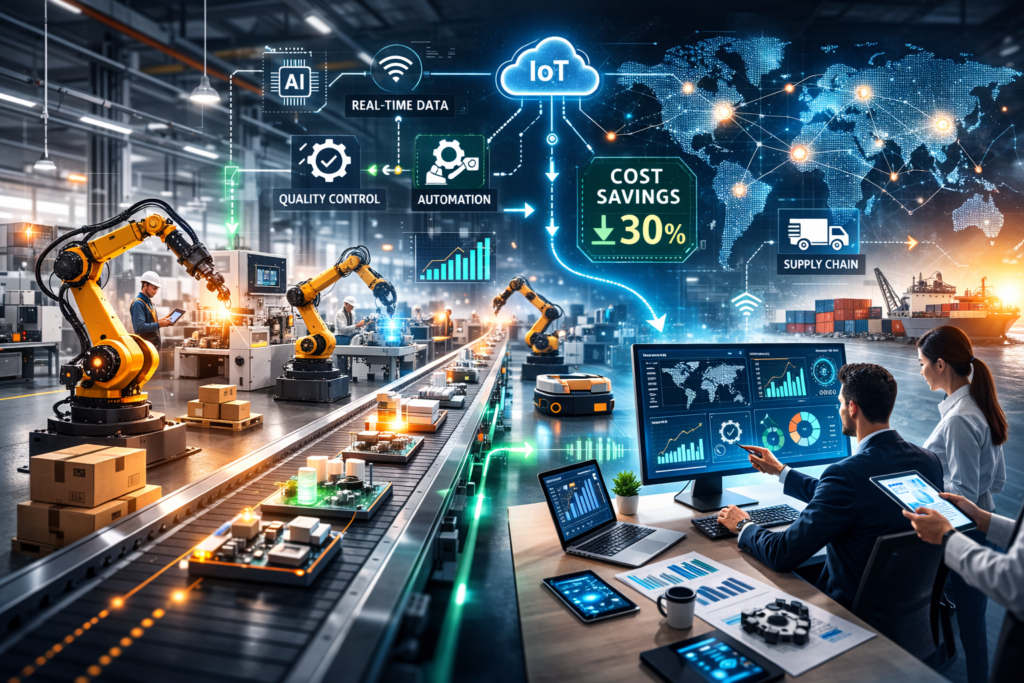
The “smart factory” is no longer a futuristic concept; it is a baseline requirement for efficiency. IoT-enabled monitoring and automated quality tracking allow for real-time data transparency between the factory floor and the startup’s headquarters.
The adoption of smart technologies in manufacturing is no longer restricted to tech giants. According to industry analysis from McKinsey, implementing digital supply chain transformations and automation can reduce operational costs by up to 30% while significantly minimizing human error in quality tracking. Startups that partner with tech-forward OEMs instantly inherit these operational upgrades, enabling a more robust supply chain optimization strategy.
How to Vet and Select the Right Manufacturer
Choosing a partner is a long-term strategic decision. Founders should prioritize the following during business operations audits:
- Verified Certifications: Do not take claims at face value. Verify ISO 9001, CE, or industry-specific certifications (like GMP) directly with the issuing bodies.
- Vertical Integration: Assess if the manufacturer owns their supply chain or if they outsource components. Higher integration equals better quality control.
- Technological Transparency: Inquire about their use of automation in business processes. Can they provide digital production logs or real-time inventory tracking?
“Stay ahead with Riproar Business News: Must-Know Economic Updates 2026, delivering concise insights on market trends, financial shifts, and key economic developments this year.”
Frequently Asked Questions (FAQs)
What is the difference between OEM and ODM manufacturing?
OEM (Original Equipment Manufacturer) produces products based on your design and specifications. ODM (Original Design Manufacturer) already has ready-made designs that you can customize and brand as your own. Startups often choose OEM when they have a unique product idea, and ODM when they want to launch faster with lower development costs.
Why are OEM/ODM partnerships important for startups?
OEM and ODM partnerships help startups avoid heavy upfront investment in factories, machines, and staff. Instead of managing production themselves, founders can focus on branding, marketing, and customer growth while experts handle manufacturing.
How do integrated OEM partners reduce startup costs?
Integrated partners manage sourcing, production, packaging, and even shipping under one roof. This reduces communication gaps, avoids delays, and cuts extra middleman costs. In the long run, this improves cash flow and keeps operations lean.
Can OEM partnerships help startups launch products faster?
Yes. Experienced manufacturers already have supply chains, engineers, and production systems in place. This allows startups to move from prototype to mass production much faster compared to building everything from scratch.
What should startups check before choosing a manufacturer?
Startups should verify certifications like ISO or GMP, check factory audits, review product samples, and confirm quality testing processes. It is also smart to ask about production capacity and lead times to avoid future delays.
How does lean manufacturing benefit D2C brands?
Lean manufacturing allows Direct-to-Consumer brands to stay flexible. Instead of locking money into equipment and warehouses, they can scale production up or down depending on demand, which reduces financial risk.
What role does quality control play in OEM partnerships?
Quality control protects your brand reputation. A reliable OEM partner conducts strict testing, inspects raw materials, and monitors production standards. This ensures products meet safety rules and customer expectations.
How do OEM/ODM partnerships support compliance in regulated industries?
In industries like baby care, cosmetics, or electronics, regulations are strict. Established manufacturers understand these rules and maintain compliance systems, which helps startups avoid legal trouble and expensive product recalls.
What is vertical integration, and why does it matter?
Vertical integration means the manufacturer controls most parts of the supply chain—from raw materials to final packaging. This reduces delays, improves quality consistency, and gives startups better control over timelines.
How do smart factories improve supply chain efficiency?
Smart factories use automation, IoT sensors, and real-time data tracking. This reduces human error, improves accuracy, and gives startups better visibility into inventory, production status, and delivery schedules.
Is outsourcing manufacturing risky for startups?
Outsourcing can be risky if the partner is unreliable. However, choosing a trusted and certified OEM/ODM with transparent systems greatly reduces these risks and often performs better than managing production in-house.
How can startups protect their product designs with OEM partners?
Startups should sign clear contracts, including Non-Disclosure Agreements (NDAs) and intellectual property clauses. Working with reputable manufacturers with long-term client relationships also lowers IP risks.
What are the hidden costs of managing your own factory?
Owning a factory involves maintenance costs, staff salaries, training, compliance fees, equipment upgrades, and unused capacity during slow seasons. These hidden costs can drain a startup’s budget quickly.
When should a startup switch from ODM to OEM?
A startup may begin with ODM to test the market quickly. Once the brand grows and wants unique product features, switching to OEM allows more customization and stronger brand differentiation.
How do integrated OEM partnerships support long-term growth?
Integrated partnerships create stability. As demand grows, the manufacturer can scale production smoothly without quality drops. This allows startups to expand into new markets confidently while maintaining consistent standards.
Conclusion
For a startup, the choice of a manufacturing partner dictates the ceiling of its growth. By moving away from fragmented sourcing and embracing integrated OEM/ODM partnerships, brands can achieve the rigorous quality standards of an industry titan while maintaining the nimble footprint of a digital disruptor.
Disclaimer”
‘This article is for educational and informational purposes only. It does not provide legal, financial, or operational advice. Business decisions involve risks, and readers should consult qualified professionals before entering OEM/ODM agreements.”