
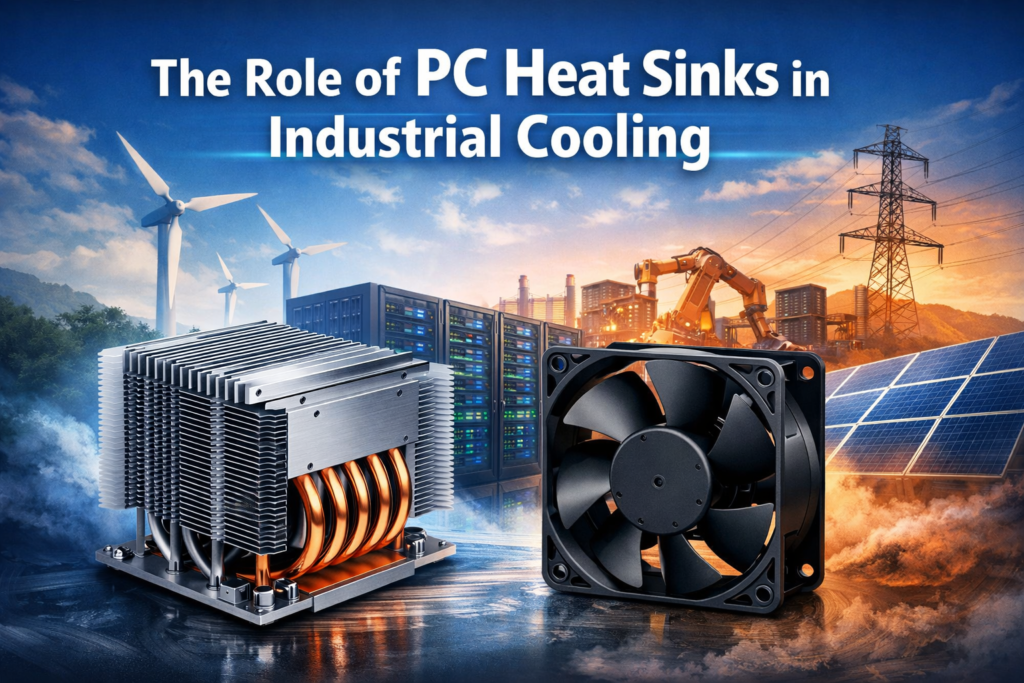
For most modern electronic devices, dealing with overheating is one of the most important system performance-related tasks. As for industrial and commercial uses, including data centers, automation systems, and telecommunications, dependably installed PC heat sinks are crucial for maintaining systems within the appropriate temperatures. It is the main passive cooling system component, dissipating unnecessary heatand avoiding hardware overheating and possible failure.
Heat sinks provide impressive thermal management when combined with other cooling systems, like DC fans. Industrial manufacturers such as ACDC FAN focus on the development of cooling systems and system add-ons that can be integrated with other cooling systems of varying designs, including custom systems.
For more compatible cooling systems, check out ACDC FAN’s DC axial fan collection here.
What is a PC heat sink, nd how does it work?
A PC heat sink is a device that collects and releases the heat of electronic components such as CPUs, GPUs, or power transistors. It is a thermal bridge that ensures heat is collected and sent to the surrounding air and away from the origin point.
A heat sink usually consists of:
- Baseplate: Constructed from copper or aluminum to maximize thermal conduction.
- Fins: Thin plates that increase the surface area for exposure to air.
- Heat Pipes: Occasionally added to enhance the rate of heat transfer from the source to the fins.
Heat sinks are utilized beyond computers. In power inverters, communication systems, LED lighting, and automation controls, continuous runtime, the sink keeps the heat in control.
With ACDC FAN DC axial fans, these heat sinks are capable of holding the temperature steady, even with high heat loads. Long continuous use of the heat sinks improves productivity and extends the life of the equipment.
Importance of Heat Sinks in Industrial Applications
For B2B companies in the fields of IT infrastructure, manufacturing, and even renewable energy, thermal management is an engineering concern. It is part of operational efficiency, product reliability, and total cost of ownership.
Here’s why heat sinks are essential in industrial applications.
1. Avoiding Equipment Failure
Industrial machinery operates continuously and generates heat. The heat produced does not dissipat,e, and components can degrade, malfunction, or even fail. The heat sink minimizes the risk of overheating and preserves the value of the system and its components, prolonging the service life of the equipment.
2. Improving Equipment Efficiency
The performance of processors, power electronics, and sensors hinges on the thermal conditions. Components providing power or controlling the temperature of other components are more efficient when the components operate in the prescribed temperature range, reducing the chances of overheating and throttling.
3. Lowering Repair and Replacement Costs
Wear and tear on equipment escalates when systems run hot, and overheating increases the frequency of repairs or replacements. The installation of heat sinks and DC axial fans will be more cost-effectivelong-termm as they reduce the frequency of maintenance.
4. Allowing Smaller and Denser Designs
The growing trend in modern equipment is the construction of more compact and powerful systems. Effective heat dissipation is becoming a necessity. Compact, thermally efficient systems can be manufactured when space-efficient heat sinks are used in conjunction with high-speed DC fans from ACDC FAN.
Different Types of Heat Sinks for B2B
Different industrial environments have different needs when it comes to heat sinks and cooling configurations. Some of the main types of heat sinks adapted to B2B environments include the following:
1. Passive Heat Sinks
Natural convection is the only mechanism of cooling for passive heat sinks. This makes these coolers suitable even for less powerful devices, laboratory instruments, and medical devices, where silence and vibration are especially needed in a cooling solution.
2. Active Heat Sinks
Active units include fans to considerably boost airflow and heat dissipation. ACDC FAN axial fans are frequently found in industrial computers, automation systems, and other hardware due to their reliable thermal control during heavy workloads in advanced automation systems.
3. Hybrid Heat Sinks
As the name suggests, these provide a mixed solution. This type of heat sink is commonly found in server racks, communication devices, and power electronics, where a careful balance between reliability and energy efficiency is required.
4. Liquid-Cooled Heat Sinks
As thermal loads become even higher, liquid coolant exchanger systems balance heat absorption and transfer. It iliquid-cooleded heat sinks that power other industrial systems, like renewable energy systems and high-frequency converters. Liquid cooling systems are more complex, but provide thermal control for the most powerful industrial applications.
Every type offers specific advantages, but for many B2B situations, the combination of heat sinks and DC fans becomes the most economical and flexible approach.
Better Thermal Management with Integrated DC Fans and Heat Sinks
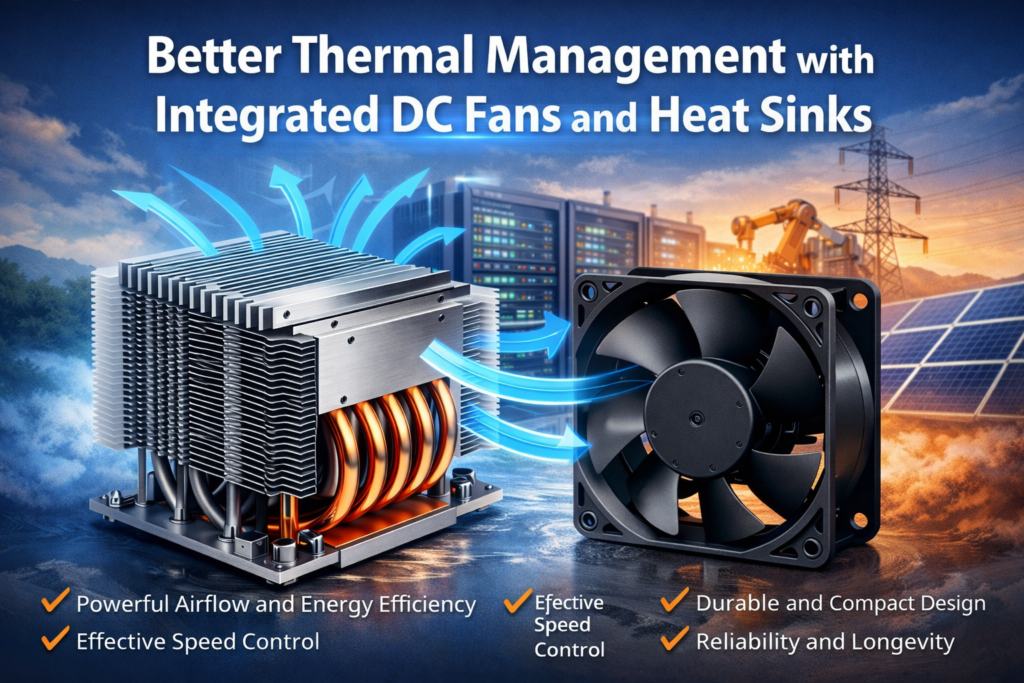
While the heat sink focuses on heat absorption and distribution, airflow is equally important for removing heat from the system. This is where DC axial fans come into play. They provide consistent air movement across the heat sink fins, promoting thermal transfer and ensuring the system operates under safe temperatures.
This is how ACDC FAN solutions help with this integration:
1. Powerful Airflow and Energy Efficiency
ACDC FAN DC axial fans are designed to provide powerful airflow and to operate with the lowest possible power consumption. This is ideal for systems that need to run continuously to avoid increased operational costs.
2. Effective Speed Control
With temperature feedback, PWM (Pulse Width Modulation) systems control the fan to provide the required cooling. This system saves energy and cuts noise levels when cooling is not needed.
3. Durable and Compact Design
Limited space for cooling components is common in industrial systems. ACDC FAN’s powerful designs, compact and efficient, are suitable for tight enclosures without compromising on airflow efficiency.
4. Reliability and Longevity
ACDC FAN uses brushless motors and premium materials to provide long service life and increased value to clients. This benefit is especially crucial for B2B industrial customers because it minimizes downtime and maintenance costs.
For high-performance DC fans compatible with modern heat sinks, check ACDC FAN’s official DC axial fan product page.
Selecting the Right Heat Sink for Your Industrial Application
When choosing a heat sink, multiple parameters must be analyzed to ensure it fulfills the system’s thermal and operational requirements. The most important ones include the following:
- Thermal Resistance (°C/W): Displays the effectiveness of a heat sink at transferring heat. Lower values signify more transfer.
- Material Composition: Aluminum is a good option considering the value vs. cost ratio, and copper is a good option for high-performance systems requiring good conductivity.
- Size and Form Factor: The dimensions must conform to the system layout and airflow design.
- Airflow Compatibility: The cooling fan’s direction and velocity must correlate with the heat sink design.
- Environmental Conditions: Use sealed or coated heat sinks, and pair with IP-rated DC fans for dusty or humid environments.
Collaborating with partners like ACDC FAN enables clients to adapt fan-heatsink combinations to their unique thermal management requirements.
“Timewarp TaskUs provides the ultimate guide to powerful BPO efficiency, offering insights, strategies, and tools to optimize business process outsourcing success.”
Frequently Asked Questions (FAQs)
What is a PC heat sink, and why is it important?
A PC heat sink is a device that pulls heat away from electronic components like CPUs or power transistors. It keeps devices cool, improves performance, and prevents overheating.
How does a heat sink work in industrial equipment?
Heat sinks absorb heat from components and spread it across fins or pipes, allowing air (or liquid) to carry it away, keeping machines running safely.
What are the main types of heat sinks used in industries?
The main types are passive, active, hybrid, and liquid-cooled heat sinks. Each type suits different machines and cooling needs.
What is the difference between passive and active heat sinks?
Passive heat sinks rely on natural airflow and are silent. Active heat sinks include fans to move air faster, providing stronger cooling for heavy-duty systems.
Can heat sinks improve equipment efficiency?
Yes, keeping components within safe temperatures ensures processors, sensors, and power electronics work better and last longer.
How do DC fans work with heat sinks?
DC fans blow air across the heat sink fins, carrying heat away faster. This combination prevents overheating and maintains stable system temperatures.
Why are heat sinks important for B2B industrial systems?
They reduce downtime, lower repair costs, and allow compact, high-performance designs, which is critical for manufacturing, data centers, and automation.
What materials are commonly used for heat sinks?
Most heat sinks are made of aluminum (lightweight, cost-effective) or copper (high thermal conductivity for demanding applications).
How do I choose the right heat sink for my system?
Consider thermal resistance, material, size, airflow compatibility, and environmental conditions to match your system’s needs.
Are liquid-cooled heat sinks better than air-cooled ones?
Liquid cooling handles very high heat loads efficiently but is more complex. Air-cooled heat sinks with fans are simpler and suitable for most industrial equipment.
Can heat sinks extend the life of my equipment?
Yes, by reducing overheating, they prevent wear and tear, keeping machines running longer and avoiding unexpected breakdowns.
What is a hybrid heat sink, and where is it used?
A hybrid heat sink combines passive and active cooling. It’s common in server racks, communication devices, and industrial electronics for balanced efficiency.
How do environmental factors affect heat sink performance?
Dust, humidity, and extreme temperatures can reduce cooling efficiency. Using coated or IP-rated heat sinks and fans helps maintain performance.
Do heat sinks reduce operational costs?
Yes, by preventing overheating, they lower energy usage, reduce maintenance needs, and minimize expensive repairs or replacements.
Can industrial systems run without heat sinks?
Technically, yes, but it’s risky. Without heat sinks, components can overheat, fail quickly, and increase downtime, making heat sinks essential for reliable operation.
Conclusion
In industrial and commercial settings, PC heat sinks are critical to operational efficiency and the prevention of expensive downtime. Coupled with ACDC FAN’s advanced DC axial fans, the systems provide exceptional heat dissipation and low noise and are highly reliable over the long term.
The combination of heat sinks and DC fans is essential to thermal management in sectors of automation and data, telecommunications, and renewable energy systems.
B2B companies needing customized energy-efficient cooling packages can work with a provider like ACDC FAN to gain access to tailored and performant durable components.
Industrial-grade DC fans can be found here: https://www.acdcecfan.com/fr/products/dc-axial-fan.
Disclaimer:
“This article is for educational purposes only. It provides general information about PC heat sinks and industrial cooling. Readers should consult qualified professionals before making technical or operational decisions, as results may vary and improper use can cause damage or safety risks.”