
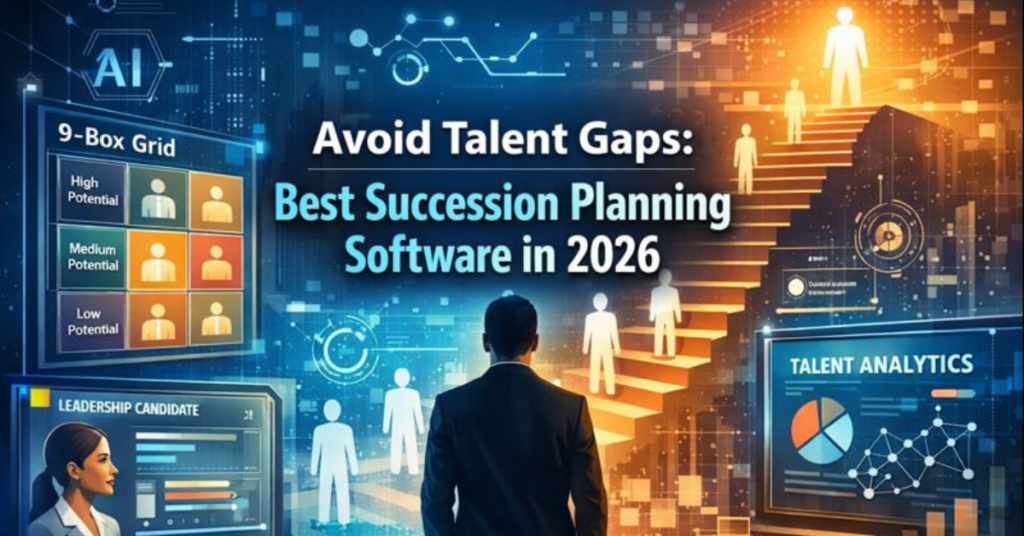
In 2026, organizations face growing pressure to build strong leadership pipelines and reduce gaps when key talent leaves or retires. A succession planning software solution becomes an essential part of any HR strategy. This type of talent management system gives leaders tools to track employee readiness, manage career progression, and build leadership development frameworks that help workers move into higher roles. Through features like performance dashboards, competency mapping, 9‑box grids, and career pathing, these systems support HR teams in strengthening workforce planning and enhancing internal mobility.
In this article, you will learn what succession planning software is, why it matters in 2026, what tools lead the market, how they compare, which features to look for, and how to use them to avoid gaps in your talent pipeline.
Introduction to Succession Planning Software
Succession planning software is a platform designed to support workforce and leadership planning by capturing talent data, analyzing readiness, and managing development plans. It replaces spreadsheets and disjointed systems with a unified HR platform where performance, career progression, and strategic workforce planning work together. With features such as dashboards, employee assessments, and predictive analytics, these tools help organizations prepare for changes.
The role of succession planning software in 2026 has expanded with the rise of AI‑based assessments, predictive scorecards, and automated workflow support. Today’s HR teams are using these tools to improve visibility over talent pools and strengthen retention and continuity across all levels of the organization.
What is succession planning software?
Succession planning software is a specialized HR system that helps companies capture critical talent information, maintain a pipeline of potential leaders, and manage development paths for employees who may fill future roles. Instead of relying on spreadsheets, HR teams use cloud‑based dashboards and analytics to track high‑potential talent, complete competency‑based assessments, and plot career roadmaps. These systems often include features such as internal mobility tracking, bench strength metrics, integration with HRIS systems, and mentoring programs.
A typical succession plan within the software industry may include career ladders, learning plans, promotion readiness scores, and strategic workforce charts that make it easy for leaders to see who is ready for advancement and who needs additional development.
Why succession planning software matters in 2026
A growing number of organizations are starting to make succession planning a strategic focus. According to a survey from Deloitte, 77% of companies now view succession planning as part of their overall talent strategy and are investing in systems to support it. That is up from previous years when many companies conducted succession discussions only informally or annually.
In 2026, organizations are also dealing with retiring Boomers, faster movement between jobs, and the increasing need to reduce skill gaps. A succession planning platform with predictive analytics, automated alerts, and talent dashboards gives HR leaders real‑time insights and clear next steps. With these tools, companies gain the visibility they need to build stronger pipelines and avoid leaving critical roles vacant for long periods.
Discover how Offshore Software Development Services can accelerate HR workflows and talent tracking, complementing your succession planning strategy.
Top Succession Planning Software for 2026
In this section, you will read about the leading succession planning software platforms available today, what features they provide, and how they support HR functions such as leadership development, competency mapping, performance review integration, and employee readiness tracking.
Deel – Features, Integrations & Updates
Deel offers a succession planning solution that focuses on career progression frameworks supported by data and AI‑powered insights. The platform includes visual tools that show career paths, competency mapping dashboards, and mechanisms for tying internal mobility to performance outcomes. Deel integrates with popular HR systems such as BambooHR, Workday, and Slack to provide seamless HRIS integration and workflow continuity. The platform’s emphasis on talent analytics and development frameworks helps teams identify talent gaps and plan growth more effectively.
PerformYard – Features, Integrations & Updates
PerformYard blends performance and succession planning in a single platform. It provides a series of tools for HR teams to manage reviews, set goals, and track employee development. This performance‑linked succession planning software connects individual KPIs to potential leadership growth. Users benefit from customizable dashboards, ongoing feedback mechanisms, and integration with HR systems. This system helps organizations monitor career progression, observe trends in employee readiness, and build a clear pipeline of future leaders.
Cornerstone OnDemand – Features & Benefits
Cornerstone OnDemand is a long‑standing HR platform that includes succession and workforce planning modules. It provides tools for scenario modeling, allowing leaders to see how changes within the workforce may affect future planning. This platform supports competency assessments and offers organizational charts that help visualize talent distribution across departments. By combining learning, performance reviews, and succession planning, it supports organizations looking to develop structured leadership pathways and manage long‑term workforce strategy.
PeopleFluent – Features & Benefits
PeopleFluent offers a succession planning system that is part of a broader talent management suite. It emphasizes learning and development together with succession strategy, giving HR teams the ability to create structured career pathing and mentoring programs. PeopleFluent’s dashboards and analytics provide visibility into who in the organization is ready for advancement, and its integration with learning modules helps close skill gaps by delivering personalized development plans. Strong integration with broader HR systems makes it easy to maintain updated data across tools.
SAP SuccessFactors – Features & Benefits
SAP SuccessFactors brings enterprise‑level capability to succession planning. The system includes tools for competency assessments, 9‑box grid evaluations, and strategic talent scorecards that help HR teams understand where bench strength is strongest and where gaps exist. The success factors suite supports mentoring, internal mobility tracking, and multi‑dimensional views of talent readiness across the organization. With mobile access and global capability, it is commonly used by large organizations seeking both depth and strategic workforce planning.
Arcoro – Features & Benefits
Arcoro combines succession planning with compliance and performance assessment tools. It uses visual talent matrices and employee scorecards to give managers a view of readiness for promotion and potential future roles. The platform supports development plans directly linked to performance outcomes, helping organizations standardize career progression and close skill gaps through structured growth plans. Arcoro also includes integration options that allow data to flow from applicant tracking systems and other HR tools.
Empxtrack – Features & Benefits
Empxtrack’s succession planning capabilities are integrated into its broader HR management system. This system provides tools to evaluate employee potential through surveys, performance matrices, and mentoring monitors. By housing succession tools alongside core HR functions, users benefit from a unified platform where employee history, performance data, and readiness assessments are linked, giving HR teams a cohesive view of their talent pipeline and growth planning.
Eightfold – Features & Benefits
Eightfold’s platform uses intelligence‑driven tools to help organizations identify the internal candidates most likely to succeed in critical roles. With AI‑based analytics, the system scans employee data to suggest potential successors and forecast where talent gaps may occur. The tool’s focus on data strength and predictive modeling gives HR leaders the insights they need to support long‑term leadership development and strategic decision‑making.
Plum – Features & Benefits
Plum provides a psychometric and competency evaluation system that goes beyond basic succession planning. It generates insights into employee potential through structured assessments that examine skills, behavioral traits, and talent indicators. By aligning talent evaluation with planned career paths, organizations can build richly informed pipelines that minimize guesswork in high‑stakes decisions.
TalentGuard – Features & Benefits
TalentGuard focuses on competency‑based succession planning and career paths. The platform provides tools to compare talent pools side‑by‑side and view readiness scores for critical roles. Its dashboards show skill gaps and potential growth areas, making it easier for HR teams to plan out structured development and placement strategies. TalentGuard also supports mentoring, career growth tracking, and personalized readiness assessments.
Built – Features & Benefits
Built is known for its ability to integrate with HRIS platforms and automatically update succession plans when people change roles or leave the organization. This reduces the manual work required to maintain accurate talent data. With real‑time plan visibility and collaboration tools, Built supports continuous planning and helps HR teams respond quickly to workforce changes.
ClayHR – Features & Benefits
ClayHR’s succession tools are part of its larger HR management suite. It includes features such as conversational support for capturing knowledge from retiring employees, aiding knowledge transfer, and reducing gaps in institutional understanding. The platform supports automated tracking of employee progress and gives HR teams tools to plot career growth and development.
Dayforce – Features & Benefits
Dayforce provides a single database that supports both core HR functions and succession planning. Through performance evaluations, role readiness metrics, and strategic dashboards, Dayforce helps organizations align development planning with broader workforce needs. Its unified system supports payroll, HR, and succession planning workflows, giving leaders seamless data access for better decisions.
ELMO Software – Features & Benefits
ELMO offers a set of tools that help mid‑market organizations manage employee lifecycle and career planning. The succession modules work with performance and learning tools to provide a full picture of readiness for advancement. Dashboards show talent movement and help HR teams build plans that support retention and reduce risk.
PageUp Succession Planning – Features & Benefits
PageUp’s system combines succession planning with broader HR functions, focusing on dynamic talent views and updated performance data. This gives HR teams visibility into how employees are progressing and whether they’re ready to take on bigger responsibilities. PageUp’s tools support ongoing planning and help organizations refine their career pathways.
SuccessionNow – Features & Benefits
SuccessionNow provides flexible workflows and templates for managing talent pipelines. The platform focuses on giving leaders easy ways to capture succession needs, build role readiness assessments, and track employee progress toward future roles. Its simplicity and focus on core succession tasks make it a good choice for organizations building planning capability.
SumTotal – Features & Benefits
SumTotal integrates succession planning with learning and skill tracking. The platform helps HR teams assign development plans, monitor progress, and link learning outcomes to future roles. This emphasis on development supports strong talent retention and structured pathing for employees working toward higher positions.
Qooper – Features & Benefits
Qooper adds a mentoring and professional development layer to succession planning. The system helps HR teams pair mentors with successors, track progress on career progression frameworks, and capture growth insights. This human‑focused approach supports development and long‑term readiness.
Workzoom – Features & Benefits
Workzoom includes succession planning inside its broader HR suite. It supports automated workflow, talent tracking, and career pathing so organizations can maintain updated talent profiles and reduce gaps. This system is best suited for companies that want succession planning closely tied to core HR processes.

Comparison of Best Succession Planning Software
Evaluating different platforms often comes down to cost, feature sets, and how they fit your HR processes. Below is a simplified summary to help you consider these factors.
Pricing Comparison
Pricing for succession planning software varies widely based on the size of your organization and the modules you require. Entry‑level systems may charge a fixed per‑user fee, while enterprise systems usually require a quote.
| Software | Pricing Structure | Notes |
| Deel | Per user, subscription | AI and analytics included |
| PerformYard | Custom | Based on workflows |
| SAP SuccessFactors | Enterprise | Scales with user base |
| Dayforce | Custom | Full HR suite included |
| Others | Varies | Quotes often needed |
This table shows that costs can vary from modest monthly fees to substantial investments for large enterprises. When choosing a system, factor in your budget, expected usage, and the value of features like predictive analytics and workflow automation.
Feature Comparison
Features across these tools include dashboards, performance review integration, mentoring tools, competency assessments, and predictive models. Some focus more on development and mentoring, while others emphasize analytical insights and strategic planning.
Pros and Cons
Most succession planning platforms bring greater clarity to your talent pipeline and support decision-making with real data. They help HR teams track readiness, fill leadership gaps more quickly, and support long‑term career development. Some systems, however, can be complex to implement, and pricing may be high for smaller organizations.
Key Features of Succession Planning Software
Good succession planning software shares a set of capabilities that help HR teams manage talent effectively.
Talent Tracking & Management
Effective tools capture employee career histories, readiness scores, and talent pool data in one place. This lets teams see who is ready for a new role now and who may need more growth opportunities.
AI & Predictive Analytics in Succession Planning
Systems with predictive analytics use models to forecast potential leadership gaps months before they occur. This gives HR professionals time to build career progression frameworks that close gaps before they affect operations.
Workflow Automation & Notifications
Automation helps push reminders to managers about reviews, mentoring check‑ins, and development milestones. This reduces time spent on manual follow‑ups and keeps plans moving forward.
Integration with HR Systems
Integration with broader HRIS and performance tools means data stays current and accurate across systems. This improves decision quality and gives a unified view of workforce planning.
Selection Criteria for Choosing Succession Planning Software
When choosing a succession planning platform, consider how well it fits your current systems and processes.
Scalability & Customization
A system should grow with your organization and allow customization of workflows and dashboards to match your processes.
User Experience & Interface
Tools that are easier to use see higher adoption from managers and employees, making your workforce planning more effective.
Security & Compliance
Ensure the solution meets industry security standards, especially if you handle sensitive employee data.
Customer Support & Training
Good support and training resources help your team get the most out of your platform and reduce downtime during implementation.
How to Avoid Talent Gaps Using Succession Planning Software
Using succession planning software strategically can reduce the risk of gaps when key people leave.
Identifying Key Roles & Potential Leaders
Begin by identifying roles critical to your business success. Use your talent management system to map employees who have the potential to fill these roles and track their readiness.
Tracking Employee Performance & Potential
High‑quality tools let you track ongoing performance reviews and competency scores, giving insight into each employee’s readiness for growth.
Creating Career Development Plans
Once potential successors are identified, build structured development plans that include mentoring, learning pathways, and performance evaluations. This supports employee growth and boosts retention.
New Product Updates & Trends in 2026
Succession planning continues to evolve in 2026, with advancements in analytics, automated workflows, and emerging tools.
AI‑driven Succession Planning Updates
Software is increasingly using AI to scan workforce data and spot patterns that humans might miss, helping leaders plan better for future needs.
Integration & Automation Enhancements
Automation now includes alerts, updates when roles change, and workflows that adapt as employees meet milestones or require new development opportunities.
Emerging Tools & Startups
New platforms are appearing that focus on mentoring, learning analytics, and niche aspects of succession planning. These solutions give organizations more choices as they refine their strategy.
Discover how our Warranty Management Software boosts efficiency and streamlines operations—learn more about its benefits.
Frequently Asked Questions (FAQs)
What is succession planning software?
Succession planning software is a platform that helps organizations identify future leaders, create career development plans, and maintain a pipeline of talent ready to fill critical roles. It replaces manual spreadsheets and ensures continuity by tracking employee skills, performance, and readiness.
Why do companies need succession planning software in 2026?
With workforce changes, retirements, and evolving skill needs, organizations must prepare their talent pipeline. This software gives visibility into high-potential employees, tracks competency-based progress, and supports leadership development programs to avoid talent gaps.
How does succession planning software help with leadership development?
The software provides frameworks for career progression, mentorship programs, and competency mapping. By identifying potential leaders and creating structured learning and development plans, it ensures employees are ready to take on key roles when needed.
What are the key features of succession planning software?
Important features include talent tracking, 9-box grids, scorecards, dashboards, internal mobility tools, integration with HRIS, competency assessments, and development planning tools. These help organizations monitor performance, readiness, and growth.
Can succession planning software improve employee retention?
Yes. By providing personalized career paths, mentoring, and development opportunities, employees feel valued and supported. This increases engagement, loyalty, and retention, while ensuring a strong leadership pipeline for the future.
How do succession planning tools track employee performance?
These platforms use dashboards and analytics to monitor competency, skill growth, goal achievement, and promotion readiness. Managers can view progress metrics, performance reviews, and skill gaps to make informed decisions.
What is a 9-box grid, and why is it used in succession planning?
A 9-box grid evaluates employees based on performance and potential. It helps organizations identify high-potential talent, assess readiness, and plan development paths, ensuring the right people are prepared for critical roles.
How does succession planning software integrate with HR systems?
Most platforms connect with HRIS, performance management tools, and learning management systems. This ensures real-time updates, centralized data, and accurate tracking across talent, performance, and development modules.
Can succession planning software support internal mobility?
Yes. The system highlights employees ready for promotion or lateral moves, matches them with suitable roles, and provides a roadmap for career progression and skill growth.
What role does predictive analytics play in succession planning?
Predictive analytics forecasts future skill gaps, employee readiness, and retention risks. It helps managers plan for critical role coverage and make data-driven promotion and development decisions.
How does succession planning software help with compliance?
These platforms track mandatory training, development plans, and succession readiness according to company policies and legal requirements. This reduces risk and supports standardized processes across departments.
Are there succession planning tools suitable for small businesses?
Yes. Tools like ClayHR, Built, and Plum offer scalable solutions for smaller teams. They provide tracking, dashboards, and competency-based frameworks without requiring complex enterprise systems.
What is the difference between succession planning software and HR software?
While HR software manages payroll, attendance, and employee records, succession planning software focuses on identifying talent, building career paths, and preparing future leaders for key roles.
How does succession planning software support mentoring programs?
The software can match mentors with mentees, track mentoring sessions, and monitor development progress. This helps employees gain guidance, strengthen skills, and prepare for higher-level roles.
How do companies measure success with succession planning software?
Success is measured through promotion readiness, reduced talent gaps, improved retention, employee engagement, and pipeline visibility. Dashboards and scorecards provide clear insights to monitor progress and adjust strategies.
Conclusion
In 2026, avoiding talent gaps requires more than reactive hiring—it demands a strategic approach using succession planning software that connects talent management, career development, and leadership progression. By implementing the right tools, organizations gain visibility into high-potential employees, track readiness through scorecards and dashboards, and build structured career paths that strengthen the workforce and preserve bench strength. Platforms like Deel, Cornerstone OnDemand, and SAP SuccessFactors provide integration with HRIS, automated tracking, and analytics-driven insights to guide promotion decisions, retention strategies, and competency mapping.
With thoughtful planning, clear workforce frameworks, and structured development plans, companies can maintain continuity, support internal mobility, and create a resilient talent pipeline that safeguards their most critical roles. Using these systems effectively transforms succession planning from a reactive process into a strategic, forward-looking solution that drives organizational growth and leadership readiness.
Disclaimer:
“The information in this article is for educational purposes only and does not constitute personal advice. While we aim for accuracy, organizations should evaluate succession planning software based on their own needs, and results may vary depending on implementation and workforce factors.”